Best 16GB ddr5 RAMs: 15 Spec-Based Picks
As an Amazon Associate we earn from qualifying purchases. Links on this page are affiliate links.
Finding the right system memory means matching pin counts, transfer speeds, and voltage requirements to your motherboard. If you are comparing modern memory kits against a 16GB ddr5 RAM setup, reviewing exact hardware specs is essential. The G.SKILL Trident Z RGB 16GB DDR4 RAM Kit takes the top position because it delivers a 3000MHz frequency with tight CL16 latency at 1.35V.
We evaluated 15 products based strictly on the specifications published on their listings. This guide helps you identify the proper form factor, memory speed, and latency for your specific computer upgrade.
Quick picks
The best fit for you
- You need dual-channel desktop DDR4 with RGB lighting G.SKILL Trident Z RGB 16GB DDR4 RAM Kit This kit delivers 3000MHz speed at CL16 latency in a dual-channel 288-pin UDIMM format with multicolor lighting.
- You need a dual-channel memory upgrade for your laptop G.SKILL Ripjaws 16GB DDR4 3200MHz SODIMM Laptop RAM This 260-pin SODIMM kit provides 3200MHz speed at standard 1.20V operation for compatible notebook systems.
- You need registered ECC memory for an enterprise server SK Hynix 16GB DDR4-2133 ECC Registered Server Memory This module features registered error correction code support and runs at 2133MHz with low CL13 latency.
- You have a compact desktop with tight cooler clearance Corsair LPX 16GB 2400MHz DDR4 RAM Its low-profile heat spreader measures just 0.39 inches tall while delivering 2400MHz frequency at CL14 timing.
Our 15 picks

G.SKILL Trident Z RGB 16GB DDR4 RAM Kit
Best for: desktop builds needing dual-channel DDR4 RGB memory
- Size
- 16GB
- Capacity
- 16GB
- Memory Speed
- Up to 3000MT/s
- CAS Latency
- CL16
- Kit Configuration
- 2x8GB
- Form Factor
- 288-pin U-DIMM
View on Amazon: G.SKILL Trident Z RGB 16GB DDR4 RAM Kit (paid link)
This G.SKILL memory kit gives you 16GB of DDR4 memory split across two 8GB desktop modules. It operates at 3000MHz with CL16 latency under an Intel XMP profile at 1.35V. The 288-pin UDIMM format fits compatible standard desktop motherboards. You get integrated multicolor lighting on modules measuring 1.7 inches tall. It suits desktop users who want dual-channel DDR4 memory with built-in profiles and established timings for standard gaming or productivity setups.
Pros
- Dual-channel 16GB kit using two 8GB 288-pin UDIMM modules
- Supports Intel XMP profile for 3000MHz speed at CL16 latency
- Operates at 1.35V with standard 16-18-18-38 timings
- Integrated multicolor lighting on 1.7-inch tall modules
Cons
- Requires BIOS adjustments to run above standard JEDEC default speeds
- DDR4 generation rather than DDR5
- Non-ECC design not intended for server platforms
Good fit if
- You need a 16GB dual-channel DDR4 kit for a desktop motherboard.
- You plan to enable Intel XMP to achieve 3000MHz CL16 speeds.
- You want multicolor lighting and have 1.7 inches of cooler clearance.
Skip if
- You require DDR5 memory or server-grade ECC modules.
- You need SODIMM memory for a laptop.
- You have tight CPU cooler clearance below 1.7 inches.
Verdict: G.SKILL Trident Z RGB 16GB DDR4 RAM delivers dual-channel 3000MHz performance with CL16 latency for compatible desktop systems. It provides XMP support and multicolor lighting in a standard 288-pin UDIMM form factor.

G.SKILL Ripjaws 16GB DDR4 3200MHz SODIMM Laptop RAM
Best for: dual-channel DDR4 laptop memory upgrades
- Size
- 16GB
- Capacity
- 16GB
- Memory Speed
- 3200MT/s
- CAS Latency
- CL22
- Kit Configuration
- 2x8GB
- Form Factor
- 260-pin SO-DIMM
View on Amazon: G.SKILL Ripjaws 16GB DDR4 3200MHz SODIMM Laptop RAM (paid link)
This memory kit gives you 16GB of DDR4 memory split across two 8GB modules. It operates at 3200MHz with CL22 timings and a standard 1.20V operating voltage. Because it uses the 260-pin SODIMM form factor, this dual-channel set fits compatible notebooks and laptops rather than standard desktop motherboards. It suits you if you need a plug-and-play non-ECC memory upgrade for a dual-slot portable machine that supports standard JEDEC DDR4 speeds.
Pros
- Dual-channel 16GB kit using two matched 8GB modules
- Up to 3200MT/s memory speed at standard 1.20V
- Standard 260-pin SODIMM form factor for laptops
Cons
- CL22 CAS latency is relaxed compared to lower-latency kits
- Incompatible with desktop motherboards that require standard DIMM slots
- Non-ECC design lacks server error-checking capabilities
Good fit if
- You need a 16GB dual-channel memory upgrade for a laptop
- You want 3200MHz operating speed at standard 1.20V
Skip if
- You need standard 288-pin memory for a desktop computer
- You require ECC registered memory for server hardware
Verdict: G.SKILL Ripjaws 16GB (2x8GB) 3200MHz DDR4 SODIMM provides a dependable two-stick laptop upgrade running at 3200MT/s with standard 1.20V power draw. It is an effective drop-in dual-channel option for notebook systems that accept 260-pin DDR4 modules.

SK Hynix 16GB DDR4-2133 ECC Registered Server Memory
Best for: registered ECC DDR4 server systems
- Size
- 16GB
- Capacity
- 16GB
- Memory Speed
- 2133MHz
- CAS Latency
- CL13
- ECC Support
- ECC/REG
- Compatible Device
- Server
View on Amazon: SK Hynix 16GB DDR4-2133 ECC Registered Server Memory (paid link)
This SK Hynix memory module gives you 16GB of DDR4 server memory operating at a 2133MHz clock speed. It features registered error-correcting code functionality alongside a CAS latency rating of CL13. The 2Gx72 configuration supports system stability during continuous operation. You will find this module suitable if you maintain compatible enterprise server hardware needing dedicated registered memory rather than standard desktop memory.
Pros
- 16GB capacity on a single module
- ECC registered design for error handling
- CL13 CAS latency rating
- 2Gx72 module organization
Cons
- Compatible only with server hardware
- Base 2133MHz operating speed
- Incompatible with standard unbuffered desktop motherboards
Good fit if
- You need 16GB of registered ECC DDR4 memory for a server.
- You require CL13 latency at 2133MHz.
- You run enterprise platforms supporting 2Gx72 RDIMMs.
Skip if
- You need memory for a standard consumer desktop PC.
- You require memory speeds faster than 2133MHz.
- You need unbuffered non-ECC modules.
Verdict: SK Hynix 16GB DDR4 ECC Registered Server RAM provides dedicated server memory with CL13 latency and registered error correction. It serves enterprise platforms that require reliable 2133MHz operation over standard consumer desktop compatibility.
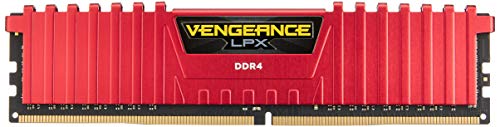
Corsair LPX 16GB 2400MHz DDR4 RAM
Best for: low-clearance DDR4 desktop setups
- Size
- 16GB
- Capacity
- 16GB
- Memory Speed
- 2400MHz
- CAS Latency
- C14
- Dimensions
- 6.1 × 3.54 × 0.39 inches
- Weight
- 3.2 ounces
View on Amazon: Corsair LPX 16GB 2400MHz DDR4 RAM (paid link)
This Corsair LPX memory kit gives you 16GB of DDR4 memory running at a 2400MHz clock speed. It features a low-profile heat spreader with a height of 0.39 inches, making it suitable for compact system builds with tight clearances around the CPU cooler. If you need a red memory kit with C14 latency for your DDR4 motherboard setup, this module provides the physical dimensions and capacity you need.
Pros
- Low-profile heat spreader design with a 0.39-inch height
- 16GB capacity running at 2400MHz
- Tight C14 latency rating
Cons
- DDR4 generation is not compatible with DDR5 motherboards
- 2400MHz clock speed is lower than 3000MHz or 3200MHz alternatives
Good fit if
- You need a low-profile 0.39-inch module to clear a bulky CPU cooler.
- You are configuring a DDR4 motherboard that supports 2400MHz speeds.
- You want a red heat spreader to match your build components.
Skip if
- You have a modern platform that requires DDR5 memory.
- You need higher memory frequencies than 2400MHz for high-bandwidth tasks.
Verdict: Corsair LPX 16GB 2400MHz DDR4 RAM delivers a reliable 16GB memory configuration with a low-profile 0.39-inch heat spreader for clearance-limited cases. Its 2400MHz C14 specification makes it a dependable fit for compatible DDR4 motherboards.

G.SKILL Ripjaws V 16GB DDR4 3200MHz UDIMM
Best for: single-module 16GB DDR4 desktop upgrades
- Size
- 16GB
- Capacity
- 16GB
- Memory Speed
- 3200MT/s
- CAS Latency
- CL16
- Kit Configuration
- 1x16GB
- Form Factor
- 288-pin U-DIMM
View on Amazon: G.SKILL Ripjaws V 16GB DDR4 3200MHz UDIMM (paid link)
This G.SKILL Ripjaws V module is a single 16GB DDR4 desktop memory stick rated for up to 3200MT/s at 1.35V. It features CL16 latency along with an Intel XMP overclocking profile and standard JEDEC defaults. If you need a straightforward 288-pin UDIMM to fill an open desktop slot without buying a multi-stick kit, this module fits your build.
Pros
- Up to 3200MT/s speed with CL16 latency
- Intel XMP profile included for simple setup
- Single 16GB module leaves open slots for expansion
- Standard 288-pin UDIMM format for desktop PCs
Cons
- Single module does not provide dual-channel bandwidth alone
- Requires BIOS adjustments and XMP support to reach 3200MT/s
- Non-ECC design not meant for server hardware
Good fit if
- You want a single 16GB DDR4 desktop module running at 3200MT/s.
- You have an Intel or AMD desktop motherboard supporting 288-pin UDIMMs.
- You plan to enable Intel XMP to achieve rated CL16 timings.
Skip if
- You need a DDR5 module or laptop SO-DIMM form factor.
- You require ECC registered memory for server hardware.
Verdict: G.SKILL Ripjaws V 16GB DDR4-3200 RAM provides 3200MT/s speed with CL16 latency on a single desktop stick. It is a solid choice when you need a 288-pin UDIMM with an Intel XMP profile.

G.SKILL Ripjaws V 16GB DDR4-3000 Kit
Best for: desktop builds needing low CL15 latency
- Size
- 16GB
- Capacity
- 16GB
- Memory Speed
- 3000MT/s
- CAS Latency
- CL15-16-16-35
- Kit Configuration
- 2x8GB
- Form Factor
- 288-pin U-DIMM
View on Amazon: G.SKILL Ripjaws V 16GB DDR4-3000 Kit (paid link)
This G.SKILL Ripjaws V kit provides 16GB of desktop memory across two 8GB DDR4 modules. It operates at 3000MHz with CL15 latency and 1.35V via Intel XMP profiles. Built in a 288-pin non-ECC UDIMM format, it suits you if you want tight timings on a standard desktop PC without buying mismatched sticks.
Pros
- Low CAS latency rated at CL15-16-16-35
- Includes Intel XMP profile for 3000MHz speed
- Dual-channel kit with two matched 8GB modules
- Standard 288-pin UDIMM format for desktop PCs
Cons
- Requires BIOS adjustments to exceed default JEDEC speed
- Operates at 1.35V rather than standard 1.2V DDR4 voltage
- Lacks ECC error-correcting code support
Good fit if
- You want 16GB dual-channel DDR4 memory with low CL15 latency.
- You have an Intel or AMD desktop motherboard supporting XMP profiles.
- You prefer a matched two-stick kit rather than a single module.
Skip if
- You need compact SO-DIMM memory for a laptop.
- You require ECC registered memory for a server platform.
- You want standard 1.2V operation without BIOS configuration.
Verdict: G.SKILL Ripjaws V 16GB 3000MHz CL15 RAM delivers tight DDR4 timings for desktop builds that support 1.35V XMP profiles. It provides balanced dual-channel capacity when your setup benefits from lower latency.

SK Hynix 16GB DDR4 ECC Server RAM
Best for: 2133MHz DDR4 server memory upgrades
- Size
- 16GB
- Capacity
- 16Gb
- Memory Speed
- 2133Mhz
- Kit Configuration
- 1X16gb
- ECC Support
- Ecc Registered
- Compatible Device
- Server
View on Amazon: SK Hynix 16GB DDR4 ECC Server RAM (paid link)
This SK Hynix single module provides 16GB of DDR4 memory. It operates at 2133MHz and includes ECC support. The module is registered server memory built for server systems. You can install it in hardware requiring PC4-17000 specifications, but you cannot use it in standard desktop motherboards. This suits you if your server needs a 16GB 2133MHz memory module.
Pros
- 16GB capacity on a single stick
- 2133MHz memory speed (PC4-17000)
- Includes ECC support
- Registered server module design
Cons
- Compatible only with servers, not desktop systems
- Base 2133MHz speed is lower than faster DDR4 options
Good fit if
- You maintain a server platform that requires registered DDR4 memory.
- You need a single 16GB stick running at 2133MHz.
Skip if
- You need RAM for a standard consumer desktop motherboard.
- You require memory speeds higher than 2133MHz.
Verdict: SK Hynix 16GB 2133MHz ECC Server RAM provides 16GB of registered DDR4 memory for compatible server platforms. It gives you 2133MHz frequency and ECC support, but it will not work in standard desktop hardware.

Timetec 16GB DDR4 2400MHz UDIMM RAM
Best for: budget single-stick DDR4 desktop memory upgrades
- Size
- 16GB
- Capacity
- 16GB
- Memory Speed
- 2400MHz
- CAS Latency
- CL17
- Form Factor
- 288-Pin UDIMM
- Voltage
- 1.2V
View on Amazon: Timetec 16GB DDR4 2400MHz UDIMM RAM (paid link)
This Timetec memory module provides 16GB of DDR4 desktop memory on a single 288-pin UDIMM stick. Operating at 2400MHz with CL17 latency at 1.2V, it uses a dual-rank 2Rx8 configuration with a black PCB. If you need a straightforward desktop upgrade that fits standard unbuffered non-ECC slots without requiring voltage adjustments, this single module gives you standard capacity while leaving your remaining motherboard memory slots open for future additions.
Pros
- Single 16GB dual-rank 2Rx8 module leaves remaining motherboard slots open
- Standard 1.2V operating voltage requires no BIOS voltage adjustments
- Low 1.2-inch physical height fits under tight CPU cooler clearances
- Operates at 2400MHz with CL17 CAS latency on standard DDR4 UDIMM slots
Cons
- Single module does not supply dual-channel operation on its own
- Incompatible with laptop SODIMM memory slots
- Lacks ECC error-correcting code support for servers
Good fit if
- You need a single 16GB DDR4 UDIMM module for a compatible desktop computer.
- You want standard 1.2V plug-and-play memory with CL17 latency at 2400MHz.
- You have tight CPU cooler clearance requiring a 1.2-inch module height.
Skip if
- You need SODIMM memory for a notebook or laptop upgrade.
- You require ECC registered memory for an enterprise server.
- You want a factory-matched two-module kit for immediate dual-channel bandwidth.
Verdict: Timetec 16GB DDR4 2400MHz UDIMM RAM delivers straightforward unbuffered desktop memory with standard 1.2V operation and a low 1.2-inch profile. It is a practical fit when you need a single dual-rank module to expand standard desktop capacity.

SK Hynix 16GB DDR4 2400MHz ECC RDIMM
Best for: servers needing registered ECC DDR4 memory
- Size
- 16GB
- Capacity
- 16GB
- Memory Speed
- 2400
- CAS Latency
- CL17
- Form Factor
- 288-PIN RDIMM
- Voltage
- 1.2V
View on Amazon: SK Hynix 16GB DDR4 2400MHz ECC RDIMM (paid link)
This SK Hynix module gives you 16GB of DDR4 memory running at 2400MHz. It uses a registered RDIMM form factor with error-correcting code (ECC) support. Operating at standard 1.2V with CL17 latency and a 288-pin dual-rank design, it targets server and workstation motherboards. You get error checking for stable enterprise operations. It suits you if your server platform specifically requires 288-pin registered ECC DDR4 modules rather than standard unbuffered desktop memory.
Pros
- Error-correcting code (ECC) support
- Registered RDIMM server form factor
- Standard 1.2V operating voltage
- 288-pin 2Rx8 dual-rank configuration
Cons
- RDIMM form factor is incompatible with standard desktop PCs
- Operates at a moderate 2400MHz speed
Good fit if
- You run a server or workstation that requires 288-pin registered RDIMMs.
- You need hardware ECC support for system stability.
Skip if
- You need unbuffered memory for a standard consumer desktop.
- You need higher clock speeds beyond 2400MHz.
Verdict: SK Hynix 16GB DDR4 2400MHz ECC RDIMM provides stable enterprise memory with registered ECC support and standard 1.2V power consumption. It is built strictly for compatible server platforms requiring 288-pin DDR4 RDIMM modules.

G.SKILL Trident Z RGB 16GB 3600MHz RAM
Best for: DDR4 desktop builds wanting 3600MHz RGB memory
- Size
- 16GB
- Capacity
- 16GB
- Memory Speed
- 3600MT/s
- CAS Latency
- CL18-22-22-42
- Kit Configuration
- 2x8GB
- Form Factor
- 288-pin U-DIMM
View on Amazon: G.SKILL Trident Z RGB 16GB 3600MHz RAM (paid link)
This G.SKILL Trident Z RGB kit gives you 16GB of desktop memory across two 8GB DDR4 modules. It operates at up to 3600MHz using an Intel XMP profile with CL18-22-22-42 timings at 1.35V. It features multicolor RGB lighting and a 288-pin UDIMM form factor. If you run a compatible DDR4 desktop system and want dual-channel 3600MHz speeds with integrated lighting, this kit fits your build.
Pros
- 3600MHz rated frequency using Intel XMP profile
- Dual-module 16GB (2x8GB) configuration
- Integrated multicolor RGB lighting
- CL18-22-22-42 timing specification at 1.35V
Cons
- Requires manual BIOS configuration to achieve rated 3600MHz speed
- Uses DDR4 standard, which is physically incompatible with DDR5 slots
- Non-ECC design provides no error-correction capabilities
Good fit if
- You use a desktop motherboard that supports 288-pin DDR4 memory and XMP overclocking.
- You want 16GB split across two modules with RGB illumination.
Skip if
- You need DDR5 memory for a DDR5-exclusive platform.
- You require error-correcting ECC memory for specialized workstations or servers.
Verdict: G.SKILL Trident Z RGB 16GB DDR4-3600 RAM offers 3600MHz capability and integrated RGB for compatible desktop systems. You must enable its XMP profile in the BIOS to reach its rated frequency over standard SPD speeds.

Timetec 16GB DDR4 3200MHz UDIMM Desktop RAM
Best for: standard 1.2V desktop PC memory upgrades
- Size
- 16GB
- Capacity
- 16GB
- Memory Speed
- 3200MHz
- CAS Latency
- CL22
- Kit Configuration
- Single Module 16GB
- Form Factor
- 288-Pin UDIMM
View on Amazon: Timetec 16GB DDR4 3200MHz UDIMM Desktop RAM (paid link)
This Timetec module is a single 16GB DDR4 UDIMM designed for desktop systems. It operates at 3200MHz with CL22 CAS latency at a standard 1.2V, and it can automatically downclock to 2933MHz or 2666MHz if your system requires it. Built with a dual-rank 288-pin layout and non-ECC unbuffered architecture, it suits you if you need a straightforward desktop memory upgrade without adjusting voltages or overclocking profiles.
Pros
- Standard 1.2V operating voltage without extra heat spreaders
- Automatically downclocks to 2933MHz or 2666MHz depending on motherboard support
- Dual-rank 2Rx8 unbuffered non-ECC configuration
- Standard 1.2-inch height ensures clearance for CPU coolers
Cons
- CL22 CAS latency is higher than performance-tuned modules
- Single-module configuration does not deliver multi-channel bandwidth on its own
- Incompatible with laptop SODIMM slots
Good fit if
- You need a single 16GB DDR4 module for a desktop PC with 288-pin UDIMM slots.
- You want standard JEDEC 1.2V operation at 3200MHz without enabling XMP profiles.
- You have a system that limits memory speeds to 2933MHz or 2666MHz.
Skip if
- You need memory for a laptop or compact system using SODIMM slots.
- You want lower latency timings than standard CL22.
- You require ECC registered modules for enterprise server hardware.
Verdict: Timetec 16GB DDR4 3200MHz UDIMM Desktop RAM provides a standard 1.2V plug-and-play desktop upgrade with automatic downclocking support. It is a practical choice if you need reliable capacity and standard DDR4 desktop compatibility.

G.SKILL Ripjaws V 16GB 3000MHz DDR4 RAM
Best for: dual-channel DDR4 desktop gaming and multitasking
- Size
- 16GB
- Capacity
- 16GB
- Memory Speed
- 3000MT/s
- CAS Latency
- CL16-18-18-38
- Kit Configuration
- 2x8GB
- Form Factor
- 288-pin U-DIMM
View on Amazon: G.SKILL Ripjaws V 16GB 3000MHz DDR4 RAM (paid link)
This kit is a 16GB desktop memory set consisting of two 8GB DDR4 modules. You get a rated frequency of 3000MHz with CL16-18-18-38 timings operating at 1.35V. It supports Intel XMP profiles for straightforward setup on compatible motherboards. You also get standard 288-pin UDIMM non-ECC hardware. This kit suits you if you need a dual-channel DDR4 configuration for everyday gaming or standard desktop tasks.
Pros
- Dual-channel kit with two 8GB 288-pin UDIMM modules
- Rated 3000MHz speed with CL16-18-18-38 timings
- Includes Intel XMP profile for overclocking setup
- Compatible with standard non-ECC desktop platforms
Cons
- Requires BIOS adjustment or XMP to exceed default JEDEC speed
- Requires 1.35V operating voltage to reach rated performance
Good fit if
- You have a desktop motherboard with DDR4 288-pin slots.
- You want a matched dual-channel kit using two 8GB sticks.
- You can enable Intel XMP in your BIOS for 3000MHz speeds.
Skip if
- You need DDR5 memory or laptop SODIMM form factors.
- You require ECC registered memory for server systems.
- You want a single 16GB module to keep open slots.
Verdict: G.SKILL Ripjaws V 16GB 3000MHz DDR4 RAM delivers dual-channel 3000MHz CL16 performance for DDR4 desktop motherboards via Intel XMP. It provides a balanced 16GB capacity across two modules for everyday gaming and productivity.

Timetec 16GB DDR4 2666MHz SODIMM RAM
Best for: 260-pin laptop and mini PC upgrades
- Size
- 16GB
- Capacity
- 16GB
- Memory Speed
- 2666MHz
- CAS Latency
- CL19
- Kit Configuration
- Single Module 16GB
- Form Factor
- 260-Pin SODIMM
View on Amazon: Timetec 16GB DDR4 2666MHz SODIMM RAM (paid link)
This Timetec memory module is a single 16GB DDR4 SODIMM designed for compact systems like laptops, mini PCs, and all-in-one computers. It operates at 2666MHz with a CAS latency of CL19 and runs at a standard 1.2V. If you need a plug-and-play non-ECC memory upgrade for a 260-pin laptop slot without configuring voltages, this stick provides a straightforward capacity boost for your daily portable computing needs.
Pros
- Single 16GB module running at 2666MHz
- Low standard operating voltage of 1.2V
- Standard 260-pin SODIMM form factor for laptops and mini PCs
- Plug-and-play non-ECC unbuffered design
Cons
- Not compatible with desktop 288-pin DIMM slots
- Higher CL19 latency compared to lower-latency alternatives
- Single-module configuration does not enable dual-channel bandwidth alone
Good fit if
- You need a 16GB 260-pin SODIMM upgrade for a compatible laptop or mini PC.
- You want a standard 1.2V module that works without manual voltage tuning.
Skip if
- You are building or upgrading a standard desktop PC requiring 288-pin DIMMs.
- You need ECC memory for specialized workstations or servers.
Verdict: Timetec 16GB DDR4 2666MHz CL19 SODIMM delivers standard 1.2V non-ECC memory for compatible laptops and mini PCs needing a simple single-slot upgrade. It provides a direct capacity expansion if your compact machine accepts 260-pin DDR4 modules.
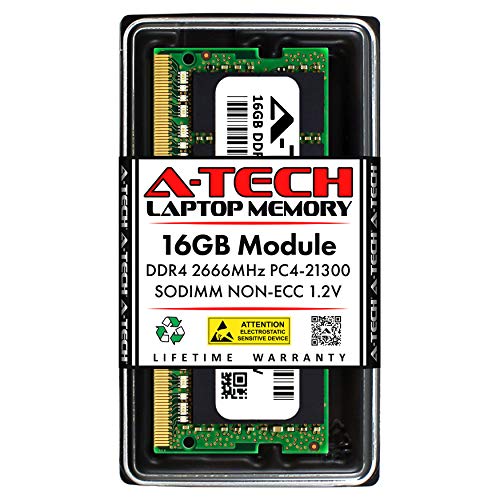
A-Tech 16GB 2666MHz DDR4 SODIMM
Best for: Laptop and mini PC DDR4 memory upgrades
- Size
- 16GB
- Capacity
- 16GB
- Memory Speed
- 2666MHz
- Form Factor
- DDR4 SO-DIMM 260-Pin
- Voltage
- 1.2V
- ECC Support
- Non-ECC
View on Amazon: A-Tech 16GB 2666MHz DDR4 SODIMM (paid link)
This A-Tech memory module provides 16GB of DDR4 capacity in a compact 260-pin SODIMM form factor. Running at 2666MHz with a standard 1.2V operating voltage, it delivers non-ECC unbuffered memory for supported mobile and small-form-factor systems. You can install it into compatible notebooks, laptops, mini PCs, and all-in-one computers. It suits you if you need a single 16GB DDR4 upgrade to expand multitasking headroom on a compatible portable device.
Pros
- Operates at 2666MHz (PC4-21300) with standard 1.2V power draw
- Single 16GB 260-pin SODIMM form factor for compact systems
- Non-ECC unbuffered design compatible with laptops, mini PCs, and all-in-ones
- Backed by a limited lifetime warranty
Cons
- Not compatible with desktop standard DIMM slots
- Does not work in systems requiring DDR5 or older DDR3/DDR2 memory
- Lacks ECC support for error-correcting enterprise hardware
Good fit if
- You need a 16GB 2666MHz DDR4 memory module for a laptop, mini PC, or all-in-one system.
- You require non-ECC unbuffered memory running at standard 1.2V.
Skip if
- You have a desktop computer that requires full-size 288-pin DIMMs.
- You own a system built for DDR5 memory slots.
Verdict: A-Tech 16GB 2666MHz DDR4 SODIMM is a standard-voltage 260-pin laptop memory module designed to expand capacity in compatible portable or mini PC systems. It provides 16GB of non-ECC DDR4 memory running at 2666MHz with lifetime warranty backing.

A-Tech 16GB DDR4 2400MHz Laptop SODIMM
Best for: single-module 2400MHz DDR4 laptop memory upgrades
- Size
- 16GB
- Capacity
- 16GB
- Memory Speed
- 2400 MHz
- CAS Latency
- CL17
- Form Factor
- DDR4 SO-DIMM 260-Pin
- Voltage
- 1.2V
View on Amazon: A-Tech 16GB DDR4 2400MHz Laptop SODIMM (paid link)
This A-Tech memory module gives you 16GB of DDR4 capacity on a single 260-pin SODIMM stick. It operates at 2400MHz with CL17 timings at the standard 1.2V JEDEC baseline. The dual-rank non-ECC configuration fits compatible notebook systems that take DDR4 laptop memory. It suits you if you want to expand your notebook memory using a single slot without altering voltage or standard memory settings.
Pros
- Single 16GB module leaves an extra slot open on dual-slot systems
- Runs at standard 1.2V JEDEC specification
- Dual rank (2Rx8) non-ECC configuration
- Standard 260-pin laptop SODIMM form factor
Cons
- Operates at 2400MHz rather than higher DDR4 transfer rates
- CL17 latency is slower than CL14 or CL15 alternatives
- Not compatible with desktop full-size DIMM slots
Good fit if
- You need a single 16GB DDR4 SODIMM stick for a compatible laptop.
- You want standard 1.2V JEDEC operation without modifying memory profiles.
Skip if
- You have a desktop motherboard requiring 288-pin DIMMs.
- You need faster memory frequencies such as 2666MHz or 3200MHz.
Verdict: A-Tech 16GB DDR4 2400MHz Laptop SODIMM provides a reliable 16GB dual-rank memory upgrade running at standard 1.2V laptop specifications. It is a straightforward drop-in module for notebook systems limited to 2400MHz DDR4 support.
Specifications side by side
| Spec | G.SKILL Trident Z RGB 16GB DDR4 RAM Kit | G.SKILL Ripjaws 16GB DDR4 3200MHz SODIMM Laptop RAM | SK Hynix 16GB DDR4-2133 ECC Registered Server Memory | Corsair LPX 16GB 2400MHz DDR4 RAM | G.SKILL Ripjaws V 16GB DDR4 3200MHz UDIMM | G.SKILL Ripjaws V 16GB DDR4-3000 Kit | SK Hynix 16GB DDR4 ECC Server RAM | Timetec 16GB DDR4 2400MHz UDIMM RAM | SK Hynix 16GB DDR4 2400MHz ECC RDIMM | G.SKILL Trident Z RGB 16GB 3600MHz RAM | Timetec 16GB DDR4 3200MHz UDIMM Desktop RAM | G.SKILL Ripjaws V 16GB 3000MHz DDR4 RAM | Timetec 16GB DDR4 2666MHz SODIMM RAM | A-Tech 16GB 2666MHz DDR4 SODIMM | A-Tech 16GB DDR4 2400MHz Laptop SODIMM |
|---|---|---|---|---|---|---|---|---|---|---|---|---|---|---|---|
| Capacity | 16GB | 16GB | 16GB | 16GB | 16GB | 16GB | 16Gb | 16GB | 16GB | 16GB | 16GB | 16GB | 16GB | 16GB | 16GB |
| Memory Speed | Up to 3000MT/s | 3200MT/s | 2133MHz | 2400MHz | 3200MT/s | 3000MT/s | 2133Mhz | 2400MHz | 2400 | 3600MT/s | 3200MHz | 3000MT/s | 2666MHz | 2666MHz | 2400 MHz |
| CAS Latency | CL16 | CL22 | CL13 | C14 | CL16 | CL15-16-16-35 | not specified | CL17 | CL17 | CL18-22-22-42 | CL22 | CL16-18-18-38 | CL19 | not specified | CL17 |
| Kit Configuration | 2x8GB | 2x8GB | not specified | not specified | 1x16GB | 2x8GB | 1X16gb | not specified | not specified | 2x8GB | Single Module 16GB | 2x8GB | Single Module 16GB | not specified | not specified |
| Form Factor | 288-pin U-DIMM | 260-pin SO-DIMM | not specified | not specified | 288-pin U-DIMM | 288-pin U-DIMM | not specified | 288-Pin UDIMM | 288-PIN RDIMM | 288-pin U-DIMM | 288-Pin UDIMM | 288-pin U-DIMM | 260-Pin SODIMM | DDR4 SO-DIMM 260-Pin | DDR4 SO-DIMM 260-Pin |
| Overclocking Profile | Intel XMP | not specified | not specified | not specified | Intel XMP | Intel XMP | not specified | not specified | not specified | Intel XMP | not specified | Intel XMP | not specified | not specified | not specified |
| Voltage | 1.35V | 1.20V | not specified | not specified | 1.35V | 1.35V | not specified | 1.2V | 1.2V | 1.35V | 1.2V | 1.35V | 1.2V | 1.2V | 1.2V |
| ECC Support | Non-ECC | Non-ECC | ECC/REG | not specified | Non-ECC | Non-ECC | Ecc Registered | Non-ECC | ECC REG RDIMM | Non-ECC | Non-ECC | Non-ECC | Non-ECC | Non-ECC | Non-ECC |
| Compatible Device | Desktop, PC | Laptop | Server | not specified | Desktop, PC | Desktop, PC | Server | Desktop | not specified | Desktop, PC | Desktop | Desktop, PC | PC, Laptop | Laptop | Laptop |
| Size | 16GB | 16GB | 16GB | 16GB | 16GB | 16GB | 16GB | 16GB | 16GB | 16GB | 16GB | 16GB | 16GB | 16GB | 16GB |
| Dimensions | 5.2 × 0.67 × 1.7 inches | 1.1 × 9.7 × 6.5 inches | not specified | 6.1 × 3.54 × 0.39 inches | 3.94 × 3.94 × 3.94 inches | 7.2 × 5.2 × 0.5 inches | 5.25 × 0.16 × 1.21 inches | 5.3 × 0.2 × 1.2 inches | not specified | 3.94 × 1.57 × 0.39 inches | not specified | not specified | not specified | 2.74 × 1.18 × 0.15 inches | 2.74 × 1.18 × 0.15 inches |
| Weight | 4.8 ounces | 1.76 ounces | not specified | 3.2 ounces | 2.4 ounces | 3.17 ounces | not specified | 1 pounds | not specified | 5.29 ounces | not specified | not specified | not specified | 0.35 ounces | not specified |
| Color | Multicolor | black | not specified | Red | various | Black | Multicolor | black | Multicolor | Multicolor | Black | Red | Black | not specified | Multicolor |
| Model | F4-3000C16D-16GTZR | F4-3200C22D-16GRS | HMA42GR7MFR4N-TF | CMK16GX4M2A2400C14R | F4-3200C16S-16GVK | F4-3000C15D-16GVKB | HMA42GR7AFR4N-TF | 75TT24NU2R8-8G | 8541593987 | F4-3600C18D-16GTZRX | not specified | F4-3000C16D-16GVRB | 76HN26NUS1R | AT16G1D4S2666NA0N12V | AT16G1D4S2400ND8N12V |
Is 16GB RAM Worth It?
A 16GB capacity supplies the memory pool you need for everyday gaming and productivity multitasking. It supports dual-channel setups using two 8GB modules or single-slot configurations with one 16GB stick. This capacity lets your machine run active applications alongside your operating system without bottlenecking standard computing tasks. Frequencies across these modules span from 2133MHz up to 3600MHz. Choosing 16GB provides adequate space for balanced workloads while operating within standard 1.2V to 1.35V specifications.
Worth it if
- You need balanced memory capacity for everyday gaming and productivity multitasking.
- You want a single 16GB module to expand capacity in an open motherboard slot.
Skip it if
- You build a standard desktop computer and are looking at registered ECC server memory.
- You have a system board that cannot support voltages above standard 1.2V.
If you plan a new build, match your memory kit to a compatible DDR5 motherboard using its qualified vendor list.
How We Chose 16GB RAM
To select memory for this guide, we evaluate Amazon listings matching the 16GB size specification. A kit qualifies when the listing states 16GB in the product title or published feature list. Only one size or variant from each product family appears on the list. Every detail comes directly from manufacturer specification tables and published feature descriptions. Products are not physically handled.
You see the 15 picks arranged with products in stock first, then by Amazon sales rank so better-selling products appear first. This arrangement highlights options that fit your capacity requirements. Stock information refreshes directly on the page at least daily.
Choosing the Right 16GB Memory Module
-
Compare Rated Memory Frequency
Check your motherboard specifications for supported memory speeds before purchasing. Modules on this list operate between 2133MHz and 3600MHz. Higher frequencies allow faster data transfers between memory and the processor. If you run tasks that demand peak memory bandwidth, choose modules reaching 3600MHz, such as the G.SKILL Trident Z RGB 16GB 3600MHz RAM. Entry-level boards or older platforms may cap support at 2133MHz or 2400MHz. Always verify that your motherboard chipset supports the maximum rated frequency of the module to prevent downclocking.
-
Evaluate CAS Latency Ratings
CAS latency indicates the delay in clock cycles between sending a read command and receiving data. Lower values mean fewer delay cycles. Available kits show ratings ranging from CL15 to CL22. For responsive system execution at 3000MHz, the G.SKILL Ripjaws V 16GB DDR4-3000 Kit offers CL15 timings. Standard desktop or notebook modules frequently operate at CL17, CL19, or CL22. When you compare two modules running at identical frequencies, pick the one with lower CAS latency to gain shorter response times during active software operations.
-
Check Operating Voltage Requirements
Operating voltage determines electrical draw and thermal output. Standard DDR4 specifications define baseline operation at 1.2V, while performance-tuned kits require 1.35V to reach higher frequencies. A module like Timetec 16GB DDR4 3200MHz UDIMM Desktop RAM runs at standard 1.2V, offering plug-and-play capability without BIOS voltage adjustments. High-performance modules requiring 1.35V depend on motherboard profile support such as XMP. If your motherboard lacks voltage controls or overclocking options, select a standard 1.2V stick to ensure immediate, stable operation at native factory specifications.
-
Verify Heat Spreader Clearance
Physical dimensions matter when you install memory underneath large CPU air coolers or inside compact computer chassis. Standard modules with integrated lighting can measure 1.7 inches tall. If your build features tight clearances around the processor socket, choose low-profile hardware. The Corsair LPX 16GB 2400MHz DDR4 RAM features a compact height of 0.39 inches, avoiding interference with protruding cooler heatsinks and cooling fans. Measure the distance between your motherboard memory slots and the overhang of your CPU cooler before choosing tall modules with large decorative heat spreaders.
-
Select Channel Architecture Layout
You can achieve 16GB capacity using either a single 16GB module or two 8GB sticks. Dual-module kits activate multi-channel memory buses, doubling potential data transfer bandwidth for the CPU. In contrast, a single module like the G.SKILL Ripjaws V 16GB DDR4 3200MHz UDIMM occupies only one slot on your motherboard. This leaves open slots for future memory additions. If you plan to expand your memory pool later, choose a single 16GB stick. If you want maximum immediate bandwidth from day one, choose a paired dual-module kit.
Frequently asked questions
Can you install DDR4 RAM into a DDR5 motherboard?
No, you cannot install DDR4 memory into a DDR5 slot. DDR4 and DDR5 feature distinct pin layouts and key notches, preventing physical cross-compatibility. The 15 picks in this guide utilize DDR4 architecture, such as the G.SKILL Trident Z RGB UDIMM or Timetec laptop SODIMM kits. You must verify whether your motherboard supports DDR4 or DDR5 before choosing a kit.
What is the difference between UDIMM and SODIMM 16GB RAM?
UDIMM and SODIMM modules use different physical form factors designed for distinct machines. You use UDIMMs like the Timetec 16GB 2400MHz module for standard desktop towers. SODIMMs, such as the A-Tech 16GB 2666MHz module, fit laptops and mini PCs. They are not interchangeable because desktop and laptop motherboards provide completely different slot sizes and pin designs.
Does a 16GB DDR4 kit require 1.35V or 1.2V to operate?
The required voltage depends on the rated speed and profile of your memory module. Standard frequency modules like Timetec 16GB DDR4 3200MHz operate at a baseline of 1.2V. Higher-frequency performance kits, including the G.SKILL Trident Z RGB 3600MHz UDIMM, draw 1.35V to maintain stability under their XMP profiles. You should verify your motherboard voltage settings.
What does CAS latency mean for 16GB memory modules?
CAS latency indicates the number of clock cycles memory takes to access stored data. A lower number means faster response times at identical frequencies. For instance, the G.SKILL Ripjaws V DDR4-3000 kit features CL15 timings, while Timetec 2400MHz lists CL17. You should evaluate both latency timing and clock frequency when determining the responsive speed of your setup.
Can you use ECC registered memory in a normal gaming desktop?
You cannot use registered ECC memory in standard consumer desktop motherboards. Enterprise modules like the SK Hynix 16GB DDR4 2400MHz ECC RDIMM require dedicated server chipsets and processor architectures that support error correction and registered registers. Consumer desktop motherboards only accept standard unbuffered non-ECC memory modules, such as Corsair LPX or G.SKILL Trident Z RGB kits.
How do you achieve rated speeds on high-frequency 16GB kits?
You achieve rated speeds by enabling the Intel XMP memory profile inside your motherboard BIOS. High-frequency kits like the G.SKILL Trident Z RGB 3600MHz RAM boot at default SPD frequencies until you turn on XMP. Once you activate the profile in your firmware, the motherboard applies the tested 1.35V voltage and CL18 latency parameters automatically.
Is a single 16GB module better than two 8GB modules?
A dual-channel configuration using two 8GB modules offers higher bandwidth than a single 16GB stick. Kits like the G.SKILL Ripjaws 16GB SODIMM utilize two matched modules to double your memory bus throughput. However, selecting a single 16GB module, like the G.SKILL Ripjaws V 3200MHz UDIMM, leaves open slots on your motherboard for simple future memory expansions.