15 Best ddr5 RAMs with Non-Ecc, Compared
As an Amazon Associate we earn from qualifying purchases. Links on this page are affiliate links.
When you upgrade your system or compare standards against ddr5 RAM with Non-ECC, choosing the proper memory speed, form factor, and timings ensures stable operation. The G.SKILL Ripjaws 16GB DDR4 3200MHz SODIMM Laptop RAM leads the ranking by delivering a 16GB dual-channel SODIMM kit operating at 3200MHz with CL22 latency at 1.20V.
We compared 15 products based directly on the specifications published on their listings. This guide helps you choose the right capacity, form factor, and operating speed for your system.
Quick picks
The best fit for you
- You need fast dual-channel memory for your laptop G.SKILL Ripjaws 16GB DDR4 3200MHz SODIMM Laptop RAM This kit supplies two 8GB SODIMM modules running at 3200MHz with CL22 latency at 1.20V.
- You want maximum single-module capacity for a desktop PC Timetec 32GB DDR4 3200MHz UDIMM Memory A single 32GB DDR4 UDIMM provides 3200MHz speed and CL22 latency at standard 1.2V.
- You are upgrading an older DDR3 notebook or mini PC Timetec 8GB (2x4GB) DDR3L 1600MHz SODIMM Kit This 2x4GB DDR3L SODIMM kit operates at 1600MHz with CL11 timings using 1.35V.
- You want lower latency in a single notebook slot G.SKILL Ripjaws 16GB DDR4 2400MHz SO-DIMM This single 16GB DDR4 SODIMM delivers a lower CAS latency of CL16 at 2400MHz.
Our 15 picks

G.SKILL Ripjaws 16GB DDR4 3200MHz SODIMM Laptop RAM
Best for: dual-channel 3200MHz DDR4 laptop upgrades
- ECC Support
- Non-ECC (what this guide is about)
- Capacity
- 16GB
- Memory Speed
- 3200MT/s
- CAS Latency
- CL22
- Kit Configuration
- 2x8GB
- Form Factor
- 260-pin SO-DIMM
View on Amazon: G.SKILL Ripjaws 16GB DDR4 3200MHz SODIMM Laptop RAM
This memory kit gives you 16GB of DDR4 capacity split across two 8GB SODIMM modules. It runs at a 3200MHz frequency with CL22 CAS latency at 1.20V. Because it uses unbuffered, non-ECC architecture, it works directly in compatible laptop and notebook motherboards. You will find this setup suits your portable computer if you want a matched two-stick kit operating at standard JEDEC speeds.
Pros
- 3200MHz operating frequency at 1.20V
- Dual-module kit with two matched 8GB sticks
- Standard 260-pin laptop form factor with non-ECC unbuffered design
- Boots at default JEDEC SPD speeds on compatible systems
Cons
- SODIMM form factor cannot fit desktop UDIMM slots
- CL22 CAS latency represents higher baseline timings
- Matched pair specification prevents mixing with other kits
Good fit if
- You need a 16GB dual-channel DDR4 memory kit for a notebook or laptop.
- You want standard 1.20V operating voltage at 3200MHz.
- You require unbuffered non-ECC memory modules.
Skip if
- You need full-size desktop UDIMM memory modules.
- You require ECC error-correcting memory support.
- You plan to mix individual sticks with other RAM kits.
Verdict: G.SKILL Ripjaws 16GB (2x8GB) 3200MHz DDR4 SODIMM provides 1.20V unbuffered notebook memory operating at 3200MHz with CL22 latency. It offers a matched dual-channel non-ECC configuration for compatible laptops.

Timetec 32GB DDR4 3200MHz UDIMM Memory
Best for: desktop systems needing high-capacity non-XMP DDR4
- ECC Support
- Non-ECC (what this guide is about)
- Capacity
- 32GB
- Memory Speed
- 3200MHz
- CAS Latency
- CL22
- Kit Configuration
- 1x32GB
- Form Factor
- 288 Pin UDIMM
This Timetec memory module gives you 32GB of DDR4 desktop memory on a single 288-pin UDIMM card. It operates at 3200MHz with CL22 timings at 1.2V and automatically downclocks to 2933MHz or 2666MHz if your system requires it. The unbuffered non-ECC dual-rank layout suits desktop motherboards without needing XMP profile configuration. It gives you a straightforward single-stick capacity upgrade for standard desktop systems that accept high-density modules.
Pros
- High single-module capacity of 32GB
- Standard JEDEC 1.2V operation without XMP profile configuration
- Automatic downclocking support to 2933MHz or 2666MHz
- Dual-rank 2Rx8 unbuffered non-ECC layout
Cons
- High CL22 latency timings
- Incompatible with laptops, mini PCs, and all-in-one systems
- Single-stick package does not provide dual-channel memory bandwidth on its own
Good fit if
- You need a single 32GB DDR4 module for an open desktop UDIMM slot.
- You want standard 1.2V operation without adjusting BIOS or XMP settings.
- You have a DDR4 desktop motherboard supporting 2666MHz, 2933MHz, or 3200MHz.
Skip if
- You need memory for a laptop, mini PC, or all-in-one device.
- You require low-latency memory with tighter timings than CL22.
- You need ECC error correction support.
Verdict: Timetec 32GB DDR4 3200MHz UDIMM delivers a high-density memory upgrade with standard 1.2V operation and plug-and-play non-XMP compatibility. It is an effective option when you want to expand desktop memory capacity on a standard DDR4 motherboard.

Timetec 8GB (2x4GB) DDR3L 1600MHz SODIMM Kit
Best for: older laptops requiring DDR3 SODIMM memory
- ECC Support
- Non-ECC (what this guide is about)
- Capacity
- 8GB
- Memory Speed
- 1600MHz
- CAS Latency
- CL11
- Kit Configuration
- 2x4GB
- Form Factor
- 204-Pin SODIMM
View on Amazon: Timetec 8GB (2x4GB) DDR3L 1600MHz SODIMM Kit
This Timetec memory package gives you an 8GB dual-channel setup using two 4GB DDR3L SODIMM modules. Operating at 1600MHz with CL11 latency, the memory supports dual-voltage operation at either 1.35V or 1.5V across standard 204-pin slots. It provides unbuffered, non-ECC memory designed for portable systems. This kit suits you if you need to maintain or refresh a compatible laptop, mini PC, or all-in-one system requiring standard DDR3 SODIMM memory.
Pros
- Dual-voltage support handles both 1.35V and 1.5V operation
- Includes two 4GB modules for dual-channel memory
- Non-ECC unbuffered design with CL11 timings at 1600MHz
- Guaranteed lifetime warranty from purchase date
Cons
- Limited to older 204-pin DDR3 and DDR3L SODIMM slots
- Total capacity capped at 8GB across two modules
Good fit if
- You have a laptop, mini PC, or all-in-one PC with 204-pin DDR3 slots.
- You need low-voltage 1.35V or standard 1.5V non-ECC SODIMM memory.
- You want an 8GB total upgrade split across two 4GB modules.
Skip if
- You need modern DDR4 or DDR5 memory modules.
- You use a desktop PC requiring full-sized DIMM slots.
- You require more than 8GB of total memory.
Verdict: Timetec 8GB DDR3L 1600MHz SODIMM Kit provides dual-voltage non-ECC memory for laptops and mini PCs using 204-pin DDR3 slots. It delivers a 2x4GB configuration running at 1600MHz with CL11 timings.

G.SKILL Ripjaws 16GB DDR4 2400MHz SO-DIMM
Best for: single-slot notebook upgrades needing CL16 latency
- ECC Support
- Non-ECC (what this guide is about)
- Capacity
- 16GB
- Memory Speed
- 2400MT/s
- CAS Latency
- CL16
- Kit Configuration
- 1x16GB
- Form Factor
- 260-pin SO-DIMM
This G.SKILL Ripjaws memory module gives you 16GB of DDR4 capacity on a single 260-pin SODIMM stick. Running at 2400MHz with CL16 latency at 1.20V, it provides tight timings for laptop memory upgrades. The non-ECC unbuffered design fits standard notebook slots without requiring multi-channel kits. It suits you if you want to expand laptop memory using an open slot while keeping latency low.
Pros
- Low CAS latency rated at CL16 with 16-16-16-39 timings
- Single 16GB module leaves an open slot for future expansion
- Operates at standard 1.20V DDR4 working voltage
- Standard 260-pin SODIMM form factor for compatible laptops
Cons
- Single-module format does not provide dual-channel bandwidth on its own
- Speed tops out at 2400MHz rather than faster DDR4 frequencies
- Incompatible with desktop motherboards requiring full-size UDIMMs
Good fit if
- You need a single 16GB DDR4 SODIMM stick with CL16 latency for a notebook.
- You want low 1.20V operating voltage in a non-ECC laptop configuration.
Skip if
- You require a matched two-stick kit to enable dual-channel memory immediately.
- You need standard UDIMM memory for a desktop computer build.
Verdict: G.SKILL Ripjaws 16GB DDR4 2400MHz SODIMM delivers responsive CL16 timings in a single unbuffered 16GB stick for compatible notebooks. It is a practical laptop upgrade when you want low latency at 1.20V without filling multiple slots.

Timetec 16GB DDR4 2400MHz UDIMM RAM
Best for: desktop systems needing single-stick 16GB DDR4 expansion
- ECC Support
- Non-ECC (what this guide is about)
- Capacity
- 16GB
- Memory Speed
- 2400MHz
- CAS Latency
- CL17
- Form Factor
- 288-Pin UDIMM
- Voltage
- 1.2V
This memory module is a single 16GB DDR4 UDIMM designed for desktop systems. It operates at a 2400MHz frequency with CL17 latency at 1.2V. Built on a 288-pin dual-rank design with Non-ECC unbuffered support, it fits standard desktop motherboards. You get a direct plug-and-play upgrade if your desktop workstation needs additional capacity without changing system voltages or installing multi-stick kits.
Pros
- Single 16GB module leaves slots open for future expansion
- Standard 1.2V operating voltage
- Dual-rank 2Rx8 architecture
- Non-ECC unbuffered 288-pin UDIMM format
Cons
- Incompatible with laptop SODIMM slots
- Single stick does not provide dual-channel operation on its own
- Operates at 2400MHz rather than higher DDR4 transfer speeds
Good fit if
- You need a single 16GB Non-ECC module for a 288-pin desktop motherboard.
- You want standard 1.2V DDR4 memory running at 2400MHz.
- You prefer dual-rank memory for a compatible desktop workstation.
Skip if
- You need laptop SODIMM memory.
- You want a matched multi-module kit for out-of-the-box dual-channel use.
- Your system requires faster memory frequencies like 3200MHz.
Verdict: Timetec 16GB 2400MHz DDR4 Desktop RAM delivers single-stick Non-ECC capacity at 1.2V for standard 288-pin motherboards. It provides a straightforward plug-and-play expansion path for compatible desktop systems.

Timetec 16GB DDR4 2400MHz SODIMM
Best for: Laptop and mini PC single-slot memory upgrades
- ECC Support
- Non-ECC (what this guide is about)
- Capacity
- 16GB
- Memory Speed
- 2400MHz
- CAS Latency
- CL17
- Kit Configuration
- Single Module 16GB
- Form Factor
- 260-Pin SODIMM
This Timetec memory module offers 16GB of DDR4 capacity running at 2400MHz for compatible notebooks, mini PCs, and all-in-one systems. Operating at 1.2V with CL17 latency, it delivers standard non-ECC unbuffered performance for 260-pin SODIMM configurations. If you need a single-stick memory expansion to update an older portable system or compact workstation, this module gives you straightforward plug-and-play installation backed by a limited lifetime warranty.
Pros
- Operates at standard 1.2V low voltage
- 16GB single-module capacity for SODIMM slots
- Plug-and-play installation for 260-pin systems
- Backed by a limited lifetime warranty
Cons
- Not compatible with desktop standard DIMM slots
- Moderate 2400MHz speed and CL17 latency
- PCB color and rank (1Rx8 or 2Rx8) vary by batch
Good fit if
- You have a laptop, mini PC, or all-in-one supporting 260-pin DDR4 SODIMM slots.
- You want a single 16GB module running at 2400MHz and 1.2V.
Skip if
- You need desktop RAM for standard 288-pin DIMM slots.
- You require ECC error-checking support for specialized hardware.
Verdict: Timetec 16GB DDR4 2400MHz SODIMM is a dependable, single-stick upgrade for laptops and mini PCs requiring 260-pin non-ECC memory. It supplies solid capacity and standard 1.2V operation without requiring manual configuration.

Timetec 32GB DDR4 2666MHz UDIMM Kit
Best for: standard DDR4 desktop PC memory upgrades
- ECC Support
- Non-ECC (what this guide is about)
- Capacity
- 32GB
- Memory Speed
- 2666MHz
- CAS Latency
- CL19
- Kit Configuration
- 2x16GB
- Form Factor
- 288-Pin UDIMM
This Timetec kit gives you 32GB of DDR4 desktop memory split across two 16GB dual-rank modules. It runs at 2666MHz with a CAS latency of CL19 at standard 1.2V. The non-ECC unbuffered design uses standard 288-pin UDIMM slots for plug-and-play installation. If you need a direct memory upgrade for a compatible desktop PC or workstation without changing voltage settings, this kit matches those system specifications.
Pros
- Dual-rank 32GB total capacity split across two 16GB modules
- Operates at standard 1.2V baseline voltage
- Plug-and-play non-ECC unbuffered 288-pin UDIMM format
- Backed by a limited lifetime warranty
Cons
- Incompatible with laptop SODIMM slots
- Operates with CL19 CAS latency
Good fit if
- You have a desktop PC or workstation that requires 288-pin DDR4 UDIMM memory.
- You want a 32GB dual-module configuration that operates at standard 1.2V.
Skip if
- You need memory for a laptop system requiring SODIMM modules.
- You require error-correcting ECC memory for server hardware.
Verdict: Timetec 32GB (2x16GB) 2666MHz DDR4 UDIMM RAM delivers non-ECC desktop memory across two dual-rank modules operating at standard 1.2V. It serves as a direct plug-and-play upgrade for compatible DDR4 desktop motherboards.

Timetec 32GB DDR4 2133MHz SODIMM Kit
Best for: laptop and mini PC DDR4 memory upgrades
- ECC Support
- Non-ECC (what this guide is about)
- Capacity
- 32GB
- Memory Speed
- 2133MHz
- CAS Latency
- CL15
- Kit Configuration
- 2x16GB
- Form Factor
- 260-Pin SODIMM
This Timetec memory package gives you a 32GB dual-channel setup using two 16GB modules. It operates at 2133MHz with CL15 CAS latency and a standard 1.2V operating profile. Built with 260-pin SODIMM architecture and non-ECC unbuffered operation, this kit suits you if you need to upgrade compatible laptops, mini PCs, or all-in-one systems designed for low-voltage DDR4 notebook memory.
Pros
- 32GB capacity across two 16GB modules
- Low CL15 CAS latency at 2133MHz
- Runs at standard 1.2V low voltage
- Plug-and-play non-ECC unbuffered design
Cons
- Incompatible with desktop DIMM motherboard slots
- Base operating speed capped at 2133MHz
- Module rank and PCB color vary by batch
Good fit if
- You need a 32GB dual-module upgrade for a DDR4 laptop, mini PC, or all-in-one system.
- You require 260-pin SODIMM memory running at 2133MHz with CL15 timings.
- You want non-ECC unbuffered memory that operates at 1.2V.
Skip if
- You have a desktop computer requiring 288-pin DIMM slots.
- You want higher DDR4 frequencies above 2133MHz.
- You need error-correcting ECC memory for specialized workstations.
Verdict: Timetec 32GB DDR4 2133MHz SODIMM Kit provides a plug-and-play 32GB dual-channel upgrade with CL15 timing for 260-pin DDR4 mobile platforms. It delivers dependable 1.2V non-ECC unbuffered performance for notebooks and small-form-factor PCs.
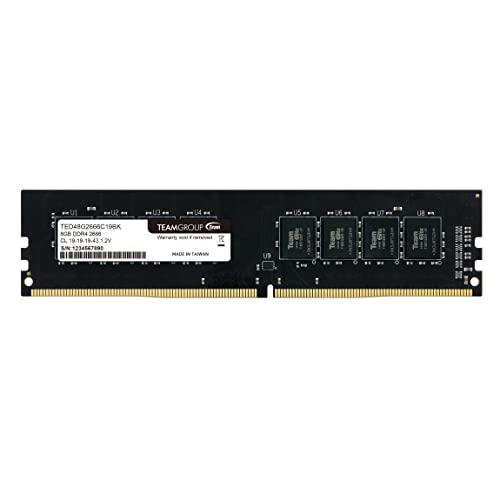
TEAMGROUP Elite 8GB DDR4 2666MHz UDIMM RAM
Best for: Single-stick desktop memory upgrades
- ECC Support
- Non-ECC (what this guide is about)
- Capacity
- 8GB
- Memory Speed
- 2666MHz
- CAS Latency
- CL19
- Kit Configuration
- 1x8GB
- Form Factor
- 288 Pin UDIMM
This TEAMGROUP Elite module gives you a single 8GB DDR4 desktop memory stick operating at 2666MHz. It features a standard 1.2V operating voltage, CL19 CAS latency, and non-ECC unbuffered design with 288 pins. The module follows JEDEC specifications for broad compatibility. You should choose this desktop UDIMM module if you need a basic single-channel memory addition or replacement for standard office tasks and general desktop computing.
Pros
- Standard 1.2V working voltage
- JEDEC compliant specification
- QVL approved for desktop motherboards
- Non-ECC unbuffered 288-pin UDIMM format
Cons
- Single 8GB stick lacks dual-channel operation out of the box
- CL19 CAS latency is slower than lower-latency alternatives
Good fit if
- You need an 8GB 2666MHz DDR4 module for a desktop PC.
- You want standard 1.2V non-ECC unbuffered memory that meets JEDEC specs.
Skip if
- You need a multi-channel memory kit with two or more modules.
- You require high-speed memory beyond 2666MHz or lower latency than CL19.
Verdict: TEAMGROUP Elite 8GB DDR4 2666MHz UDIMM provides standard JEDEC-compliant desktop memory with low 1.2V power requirements. It serves as a straightforward single-channel upgrade for everyday computing systems.

Timetec 32GB DDR4 3200MHz UDIMM Kit
Best for: standard desktop 32GB DDR4 memory upgrades
- ECC Support
- Non-ECC (what this guide is about)
- Capacity
- 32GB
- Memory Speed
- 3200MHz
- CAS Latency
- CL22
- Kit Configuration
- 2x16GB
- Form Factor
- 288-Pin UDIMM
This Timetec memory package is a 32GB dual-channel desktop kit containing two 16GB DDR4 UDIMM modules. It operates at 3200MHz with a CL22 CAS latency at a standard 1.2V, and it features non-ECC unbuffered dual-rank architecture. If your motherboard runs DDR4 slots at lower speeds, it automatically downclocks to 2933MHz or 2666MHz. This setup suits you if you need a plug-and-play memory refresh for an unbuffered desktop workstation.
Pros
- Includes 32GB total capacity across two 16GB dual-rank modules
- Standard 1.2V operating voltage requires no extra power tweaking
- Automatically steps down to 2933MHz or 2666MHz if required by your motherboard
- Non-ECC unbuffered design fits standard 288-pin desktop slots
Cons
- Operates with a CL22 CAS latency
- Not compatible with laptop SODIMM slots
Good fit if
- You need 32GB of non-ECC DDR4 memory for a 288-pin desktop motherboard.
- You want modules that auto-downclock to 2933MHz or 2666MHz when necessary.
Skip if
- You need laptop memory or compact SODIMM modules.
- You are building a motherboard platform that requires DDR5 RAM.
Verdict: Timetec 32GB DDR4 3200MHz UDIMM Kit provides a straightforward plug-and-play dual-channel DDR4 memory upgrade for standard desktop systems. It delivers 3200MHz operation at 1.2V with built-in downclocking support for lower motherboard speeds.

Timetec 16GB DDR4 2666MHz SODIMM RAM
Best for: Laptop and mini PC DDR4 memory upgrades
- ECC Support
- Non-ECC (what this guide is about)
- Capacity
- 16GB
- Memory Speed
- 2666MHz
- CAS Latency
- CL19
- Kit Configuration
- Single Module 16GB
- Form Factor
- 260-Pin SODIMM
The Timetec 16GB DDR4 2666MHz SODIMM RAM is a single-module memory upgrade built for laptops, mini PCs, and all-in-one systems. Operating at 1.2V with CL19 latency, this 260-pin non-ECC unbuffered stick provides 16GB of additional capacity without requiring manual voltage adjustments. It suits you if you need a plug-and-play DDR4 memory expansion for a compatible portable or small-form-factor machine with standard SODIMM slots.
Pros
- Single 16GB module running at 2666MHz (PC4-21300)
- Standard 1.2V operating voltage with CL19 latency
- Non-ECC unbuffered design for laptops, mini PCs, and AIOs
- Backed by a limited lifetime warranty
Cons
- Incompatible with standard desktop DIMM slots
- Single-stick package does not provide dual-channel memory on its own
- Module rank (1Rx8 or 2Rx8) and PCB color vary by production batch
Good fit if
- You need a 16GB DDR4 SODIMM module for a laptop, mini PC, or all-in-one computer.
- You want standard 1.2V plug-and-play operation at 2666MHz.
Skip if
- You have a desktop computer requiring standard full-size DIMM modules.
- You need ECC memory support for specialized enterprise workstations.
Verdict: Timetec 16GB DDR4 2666MHz SODIMM RAM delivers a reliable single-stick memory expansion with standard 1.2V operation and non-ECC specifications for compatible notebooks and mini PCs.

A-Tech 32GB (2x16GB) DDR4 2133MHz SODIMM Kit
Best for: older DDR4 laptop dual-channel memory upgrades
- ECC Support
- Non-ECC (what this guide is about)
- Capacity
- 32GB
- Memory Speed
- 2133 MHz
- CAS Latency
- CL15
- Kit Configuration
- 2x16GB
- Form Factor
- DDR4 SO-DIMM 260-Pin
View on Amazon: A-Tech 32GB (2x16GB) DDR4 2133MHz SODIMM Kit
This A-Tech memory kit delivers 32GB of capacity across two 16GB DDR4 SODIMM modules. Operating at 2133MHz with a CL15 latency rating, it runs on the standard JEDEC 1.2V profile. The dual-rank, non-ECC unbuffered setup fits compatible notebooks and laptop computers. If you need a dual-channel memory upgrade for a system requiring 260-pin DDR4 SODIMMs at baseline speeds, this setup gives you dependable capacity for day-to-day multitasking.
Pros
- 32GB total capacity split across two 16GB modules
- CL15 CAS latency at 2133MHz speed
- Standard JEDEC 1.2V DDR4 operating voltage
- Dual-rank 2Rx8 non-ECC unbuffered design
- Backed by manufacturer lifetime warranty
Cons
- DDR4 SODIMM format is incompatible with desktop UDIMM or DDR5 slots
- 2133MHz frequency is slower than higher-speed DDR4 options
Good fit if
- You need a 32GB dual-channel DDR4 SODIMM upgrade for your laptop.
- You want standard 1.2V non-ECC memory with CL15 latency at 2133MHz.
Skip if
- You require full-size desktop UDIMMs or DDR5 memory.
- You need memory speeds faster than 2133MHz.
Verdict: A-Tech 32GB (2x16GB) DDR4 2133MHz SODIMM provides dual-channel 1.2V laptop memory for DDR4 systems requiring CL15 timings at 2133MHz. It offers dependable non-ECC capacity if your notebook uses 260-pin SODIMM slots.
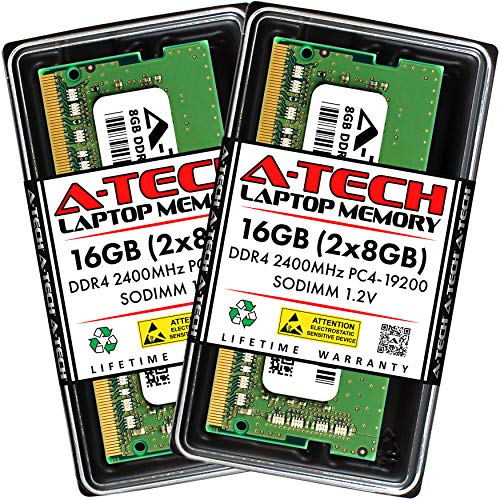
A-Tech 16GB (2x8GB) DDR4 2400MHz SODIMM
Best for: laptop and mini PC DDR4 upgrades
- ECC Support
- Non-ECC (what this guide is about)
- Capacity
- 16GB
- Memory Speed
- 2400 MHz
- CAS Latency
- CL17
- Kit Configuration
- 2x8GB
- Form Factor
- DDR4 SO-DIMM 260-Pin
This memory kit gives you 16GB of DDR4 memory across two 8GB SODIMM modules running at 2400MHz. It operates at standard 1.2V JEDEC voltage with CL17 latency and Non-ECC unbuffered support. Designed for compatible laptops, notebooks, mini PCs, and all-in-one systems with 260-pin slots, this dual-channel setup suits you if you need a reliable low-voltage memory upgrade for general computing without changing standard clock settings.
Pros
- Standard 1.2V JEDEC operating voltage
- Dual-channel 16GB capacity across two 8GB modules
- Non-ECC unbuffered 260-pin SODIMM form factor
- Includes a limited lifetime warranty
Cons
- Limited to 2400MHz clock frequency
- CL17 latency is higher than lower-latency kits
- Laptop SODIMM design does not fit standard desktop UDIMM slots
Good fit if
- You need a 16GB dual-channel DDR4 kit for a laptop, mini PC, or all-in-one system.
- You want standard JEDEC 1.2V operation at 2400MHz.
- You require Non-ECC unbuffered memory with a 260-pin interface.
Skip if
- You need full-sized desktop UDIMM memory modules.
- You require speeds higher than 2400MHz or tighter timings than CL17.
- You need error-correcting ECC memory for workstation hardware.
Verdict: A-Tech 16GB DDR4 2400MHz SODIMM Kit provides standard JEDEC 1.2V non-ECC memory for compatible laptops and compact systems. It delivers reliable dual-channel operation at 2400MHz with CL17 timings.

G.SKILL Ripjaws 16GB DDR4 2666MHz Laptop RAM
Best for: laptops needing 16GB non-ECC DDR4 memory
- ECC Support
- Non-ECC (what this guide is about)
- Capacity
- 16GB
- Memory Speed
- 2666MT/s
- CAS Latency
- CL19
- Kit Configuration
- 2x8GB
- Form Factor
- DDR4 SO-DIMM, 260-pin
View on Amazon: G.SKILL Ripjaws 16GB DDR4 2666MHz Laptop RAM
You get a 16GB dual-channel laptop kit split into two 8GB modules. It operates at 2666MHz with CL19-19-19-43 timings under 1.20V. This 260-pin SODIMM memory uses non-ECC unbuffered signaling. It suits you if your notebook requires standard DDR4 SODIMM expansion without ECC hardware support. Matching modules ensure paired dual-channel operation at JEDEC default speeds.
Pros
- Includes two matched 8GB modules for 16GB total capacity
- Runs at 2666MHz with 1.20V standard voltage
- Non-ECC unbuffered design matches standard notebook requirements
Cons
- DDR4 interface incompatible with DDR5 slots
- 260-pin SODIMM form factor incompatible with desktop UDIMM slots
Good fit if
- You need a 16GB dual-module non-ECC DDR4 kit for your laptop.
- You have 260-pin SODIMM slots that support 2666MHz memory.
Skip if
- You require full-size desktop UDIMM memory modules.
- You need DDR5 memory support or ECC error correction.
Verdict: G.SKILL Ripjaws 16GB DDR4 2666MHz SODIMM supplies dual-channel 2666MHz non-ECC memory for laptops with compatible DDR4 SODIMM slots.
G.SKILL Ripjaws 32GB DDR4 2666MHz SODIMM
Best for: dual-slot DDR4 laptop memory upgrades
- ECC Support
- Non-ECC (what this guide is about)
- Capacity
- 32GB
- Memory Speed
- 2666MT/s
- CAS Latency
- CL19
- Kit Configuration
- 2x16GB
- Form Factor
- 260-pin SO-DIMM
This memory kit gives you 32GB of dual-channel capacity across two 16GB DDR4 SODIMM modules. Operating at 2666MHz with CL19 timings at 1.20V, it provides non-ECC unbuffered memory tailored for compatible laptops and notebooks. You get a matched 260-pin kit designed to run at standard JEDEC default SPD speeds on supported hardware. It suits you if you need a high-capacity laptop memory upgrade without altering base voltage specifications.
Pros
- 32GB total capacity split across two matched 16GB modules
- Runs at standard 1.20V DDR4 operating voltage
- Non-ECC unbuffered 260-pin SODIMM form factor for notebooks
- Boots at default SPD speeds on compatible hardware
Cons
- Incompatible with desktop motherboard UDIMM slots
- Rated transfer speed capped at 2666MHz with CL19 latency
- Does not support ECC error correction
Good fit if
- You need 32GB of DDR4 memory for a laptop with two SODIMM slots.
- You want matched non-ECC modules running at standard 1.20V and 2666MHz.
Skip if
- You have a desktop system requiring standard 288-pin UDIMM modules.
- You require error-correcting ECC memory or DDR5 architecture.
Verdict: G.SKILL Ripjaws 32GB DDR4 2666MHz SODIMM RAM provides a matched two-stick laptop upgrade running at 1.20V with CL19 timings. It delivers reliable non-ECC capacity for dual-slot notebook systems supported by 2666MHz DDR4 memory.
Specifications side by side
| Spec | G.SKILL Ripjaws 16GB DDR4 3200MHz SODIMM Laptop RAM | Timetec 32GB DDR4 3200MHz UDIMM Memory | Timetec 8GB (2x4GB) DDR3L 1600MHz SODIMM Kit | G.SKILL Ripjaws 16GB DDR4 2400MHz SO-DIMM | Timetec 16GB DDR4 2400MHz UDIMM RAM | Timetec 16GB DDR4 2400MHz SODIMM | Timetec 32GB DDR4 2666MHz UDIMM Kit | Timetec 32GB DDR4 2133MHz SODIMM Kit | TEAMGROUP Elite 8GB DDR4 2666MHz UDIMM RAM | Timetec 32GB DDR4 3200MHz UDIMM Kit | Timetec 16GB DDR4 2666MHz SODIMM RAM | A-Tech 32GB (2x16GB) DDR4 2133MHz SODIMM Kit | A-Tech 16GB (2x8GB) DDR4 2400MHz SODIMM | G.SKILL Ripjaws 16GB DDR4 2666MHz Laptop RAM | G.SKILL Ripjaws 32GB DDR4 2666MHz SODIMM |
|---|---|---|---|---|---|---|---|---|---|---|---|---|---|---|---|
| Capacity | 16GB | 32GB | 8GB | 16GB | 16GB | 16GB | 32GB | 32GB | 8GB | 32GB | 16GB | 32GB | 16GB | 16GB | 32GB |
| Memory Speed | 3200MT/s | 3200MHz | 1600MHz | 2400MT/s | 2400MHz | 2400MHz | 2666MHz | 2133MHz | 2666MHz | 3200MHz | 2666MHz | 2133 MHz | 2400 MHz | 2666MT/s | 2666MT/s |
| CAS Latency | CL22 | CL22 | CL11 | CL16 | CL17 | CL17 | CL19 | CL15 | CL19 | CL22 | CL19 | CL15 | CL17 | CL19 | CL19 |
| Kit Configuration | 2x8GB | 1x32GB | 2x4GB | 1x16GB | not specified | Single Module 16GB | 2x16GB | 2x16GB | 1x8GB | 2x16GB | Single Module 16GB | 2x16GB | 2x8GB | 2x8GB | 2x16GB |
| Form Factor | 260-pin SO-DIMM | 288 Pin UDIMM | 204-Pin SODIMM | 260-pin SO-DIMM | 288-Pin UDIMM | 260-Pin SODIMM | 288-Pin UDIMM | 260-Pin SODIMM | 288 Pin UDIMM | 288-Pin UDIMM | 260-Pin SODIMM | DDR4 SO-DIMM 260-Pin | DDR4 SO-DIMM 260-Pin | DDR4 SO-DIMM, 260-pin | 260-pin SO-DIMM |
| Overclocking Profile | not specified | Non-XMP | not specified | not specified | not specified | not specified | not specified | not specified | not specified | not specified | not specified | not specified | not specified | not specified | not specified |
| Voltage | 1.20V | 1.2V | 1.35V / 1.5V | 1.20V | 1.2V | 1.2V | 1.2V | 1.2V | 1.2V | 1.2V | 1.2V | 1.2V | 1.2V | 1.20V | 1.20V |
| ECC Support | Non-ECC | Non-ECC | Non-ECC | Non-ECC | Non-ECC | Non-ECC | Non-ECC | Non-ECC | Non-ECC | Non-ECC | Non-ECC | Non-ECC | Non-ECC | Non-ECC | Non-ECC |
| Compatible Device | Laptop | Desktop, PC | PC, Laptop | Laptop | Desktop | PC, Laptop | Desktop | PC, Laptop | Desktop, PC | Desktop | PC, Laptop | Laptop | Laptop | Laptop | Laptop |
| Size | 16GB | 32GB | 8GB KIT(2x4GB) Green | 16 GB (1 x 16 GB) | 16GB | 16GB Standard | Dual Rank 32GB KIT(2x16GB) | Dual Rank 32GB KIT(2x16GB) | 8GB Kit (1x8GB) | 32GB (2x16GB) | 16GB | 32GB (2 x 16GB) | 16GB Kit (2 x 8GB) | 16GB | 32GB |
| Dimensions | 1.1 × 9.7 × 6.5 inches | not specified | 2.66 × 0.2 × 1.2 inches | 1.97 × 0.79 × 3.94 inches | 5.3 × 0.2 × 1.2 inches | not specified | not specified | 3.74 × 3.5 × 0.24 inches | 5.91 × 3.94 × 1.97 inches | not specified | not specified | 2.74 × 1.18 × 0.15 inches | 2.74 × 1.18 × 0.15 inches | 6 × 5.2 × 0.2 inches | 23.6 × 23.6 × 33.5 inches |
| Weight | 1.76 ounces | not specified | not specified | 1.06 ounces | 1 pounds | 0.32 ounces | not specified | 1.12 ounces | 1.06 ounces | not specified | not specified | not specified | not specified | 1.7 ounces | not specified |
| Color | black | Black | not specified | 2400MHz | black | Gold | Multicolor | Black | Single Channel | not specified | Black | DDR4 2133 (PC4-17000) | Multicolor | not specified | Black |
| Model | F4-3200C22D-16GRS | not specified | 8GB KIT(2x4GB) DDR3L / DDR3 1600MHz | F4-2400C16S-16GRS | 75TT24NU2R8-8G | 76TT24NUS | 7 | 32GB Kit | TED48G2666C1901 | 78AP16NUSL1R8 | 76HN26NUS1R | AT16G2D4S2133ND8N12V | AT8G2D4S2400NA0N12V | F4-2666C19D-16GRS | F4-2666C19D-32GRS |
Is Non-ECC Memory Worth It?
Non-ECC memory provides standard unbuffered operation for everyday desktop PCs, notebooks, and mini PCs. Because typical consumer motherboards use unbuffered memory, non-ECC modules deliver direct plug-and-play compatibility across standard SODIMM and UDIMM slots. Selecting non-ECC RAM matches standard hardware requirements for normal computing platforms without compatibility conflicts. It delivers stable single-channel and dual-channel configurations running at standard operating voltages like 1.2V and 1.35V for everyday computing, direct desktop expansions, and routine laptop system upgrades.
Worth it if
- You upgrade a standard consumer desktop, notebook, or mini PC using standard unbuffered memory slots.
- You need plug-and-play compatibility at standard 1.2V or 1.35V operating voltages without configuring special memory modes.
Skip it if
- You use specialized hardware that explicitly requires error-correcting code memory support.
- You operate a motherboard platform designed solely for ECC modules rather than standard unbuffered RAM.
If you choose modules without thermal spreaders, compare specifications for the best heatsinks for RAM to evaluate physical clearance and cooling capacity.
How We Picked Non-ECC RAM
You find 15 memory kits here selected specifically for non-ECC support. To create this list, we check published specifications, product titles, and feature lists on Amazon listings. A product qualifies when its listing states non-ECC operation in the title or specifications. We rely entirely on published manufacturer data rather than physical handling. Only one size or variant from each product family appears on the page.
The options are ordered with products in stock first, then by Amazon sales rank, placing better-selling products first. We evaluate recorded hardware specifications such as form factor, memory speed, and CAS latency so you can match the right stick to your device. Inventory status refreshes automatically each day.
How to Select Compatible Non-ECC RAM
-
Check Supported Memory Frequency
Your motherboard and processor determine the maximum memory speed your system can handle. Modules in this category range from 2133MHz up to 3200MHz. If you install a high-speed module like the Timetec 32GB DDR4 3200MHz UDIMM Kit on a board rated for lower speeds, the memory downclocks automatically to match the system ceiling. Check your processor specifications to find its native frequency rating. Choosing matching frequency guarantees full rated bandwidth without manual BIOS adjustments.
-
Evaluate CAS Latency Timings
CAS latency measures the delay in clock cycles between a read command and available data. Lower CL numbers mean fewer delay cycles during memory operations. Available modules range from CL15 and CL16 up to CL22. For example, the G.SKILL Ripjaws 16GB DDR4 2400MHz SO-DIMM operates with a low CL16 timing. Higher frequency modules often carry higher latency numbers, such as CL22 at 3200MHz. Compare both frequency and latency to balance overall transfer response.
-
Select Single or Dual Channel
You can choose between single-stick modules and two-stick matched kits. A two-stick package, such as the G.SKILL Ripjaws 16GB DDR4 3200MHz SODIMM Laptop RAM, enables dual-channel mode to double the data bus width between your processor and RAM. Single modules, such as individual 16GB sticks, leave an open slot for future additions. If your device has two memory slots available, install a matched pair to maximize memory throughput for demanding workloads.
-
Calculate System Capacity Requirements
Your workload dictates how many gigabytes of memory your computer requires. Basic computing, light web browsing, and office tasks run comfortably on 8GB. Upgrading to 16GB provides enough headroom for modern multitasking and heavier background utilities. Demanding content creation, virtual machines, and dense multitasking require 32GB setups, which you can achieve using kits like the Timetec 32GB DDR4 2666MHz UDIMM Kit. Verify your motherboard maximum supported capacity before selecting large-density configurations.
-
Verify JEDEC Standard Support
Standard non-ECC memory relies on JEDEC specifications to run at advertised speeds without BIOS adjustments. Products like the TEAMGROUP Elite 8GB DDR4 2666MHz UDIMM RAM feature standard JEDEC compliance to boot directly at rated speeds. Many prebuilt desktop computers and laptop motherboards lack custom memory overclocking profiles. Choosing JEDEC-standard modules guarantees immediate plug-and-play operation on systems that cannot adjust memory settings manually. Check your manufacturer documentation to confirm whether your system requires fixed JEDEC profiles.
Frequently asked questions
What is the functional difference between UDIMM and SODIMM modules?
UDIMM modules fit desktop motherboards, whereas SODIMM modules fit laptops and compact systems. Standard desktop builds require UDIMMs such as the TEAMGROUP Elite 8GB or Timetec 32GB UDIMM. Notebooks and mini PCs use smaller SODIMM form factors like the G.SKILL Ripjaws 16GB kit. Physical layouts and dimensions differ completely, meaning you cannot interchange them between slot types.
Does lower CAS latency improve memory performance?
Lower CAS latency indicates fewer clock cycles required for memory to access stored data. A smaller rating translates to quicker responsiveness at a given frequency. For instance, the G.SKILL Ripjaws 16GB 2400MHz SODIMM features CL16 latency, whereas the Timetec 16GB 2400MHz SODIMM operates at CL17. When comparing modules running at identical frequencies, lower CAS latency provides faster access cycles.
Can you run dual-channel memory using a single RAM stick?
You cannot enable dual-channel memory bandwidth using a single memory stick. Dual-channel operation requires installing pairs of matching sticks across supported motherboard channels. Kits like the A-Tech 16GB (2x8GB) 2400MHz SODIMM or Timetec 32GB (2x16GB) 2666MHz UDIMM activate dual-channel mode immediately. Single-module options like the 16GB Timetec 2400MHz UDIMM operate in single-channel mode until you install an additional module.
What happens if you install memory with a higher frequency than your motherboard supports?
Your system will downclock the memory module to match the motherboard's maximum supported frequency. Motherboards regulate clock speeds through standardized profiles. For example, if you place the Timetec 32GB 3200MHz UDIMM Kit onto a board rated only for 2666MHz or 2400MHz, the memory automatically runs at that lower ceiling. Operating voltage remains steady at the standard 1.2V specification.
Can you install DDR4 or DDR5 RAM into a DDR3 slot?
You cannot install newer DDR generations into older DDR3 slots due to physical and electrical differences. Each memory generation features unique notch positions and operational voltages. DDR3L kits like the Timetec 8GB 1600MHz SODIMM operate at 1.35V with specific pin layouts. DDR4 modules run at 1.2V and cannot physically seat into DDR3 or DDR5 sockets. You must match your motherboard generation.
How does non-ECC memory differ from ECC memory?
Non-ECC memory lacks specialized error-checking chips found on server-grade error-correcting modules. Non-ECC modules process standard read and write tasks directly without adding parity calculations. Consumer desktop and laptop platforms, including systems running the G.SKILL Ripjaws 32GB 2666MHz SODIMM or Timetec 16GB UDIMM, require non-ECC unbuffered modules. Installing registered ECC memory into standard consumer boards prevents the machine from booting.
What voltage do standard DDR4 SODIMM and UDIMM modules require?
Standard DDR4 SODIMM and UDIMM modules operate at 1.2V. This baseline voltage ensures low energy consumption and standard thermal output across portable and desktop systems. Modules like the Timetec 32GB 2133MHz SODIMM Kit, A-Tech 16GB 2400MHz SODIMM, and Timetec 16GB 2400MHz UDIMM all run natively at 1.2V without requiring manual voltage adjustments inside your system BIOS.