PUSKILL 16GB DDR4 3200MHz SODIMM vs PUSKILL 16GB DDR4 3200MHz Desktop: Spec Comparison
As an Amazon Associate we earn from qualifying purchases. Links on this page are affiliate links.
This puskill 16gb ddr4 3200mhz sodimm vs 16gb ddr4 3200mhz desktop comparison helps you pick the right memory for your system. Both kits offer 16GB of capacity and run at 3200MHz. The main difference is their design and target device. One uses a SODIMM form factor for laptops, while the other uses a UDIMM kit with a heatsink for desktops. You must match the form factor to your computer type to ensure compatibility.
Key differences
| Aspect | PUSKILL 16GB DDR4 3200MHz SODIMM | PUSKILL 16GB DDR4 3200MHz Desktop RAM |
|---|---|---|
| Compatible Device | Laptop | Desktop |
| Form Factor | SODIMM | 288-pin UDIMM |
| Kit Configuration | 1x16GB | 2x8GB |
| CAS Latency | CL22 | CL16 |
| Overclocking Profile | Not listed | XMP, DOCP |
Which one should you choose?
Choose PUSKILL 16GB DDR4 3200MHz SODIMM if
- You are upgrading a laptop that requires SODIMM modules.
- You want a single 16GB stick for easy plug-and-play installation without BIOS tweaks.
- You prioritize power efficiency and lower voltage operation for compact devices.
Choose PUSKILL 16GB DDR4 3200MHz Desktop RAM if
- You are building or upgrading a desktop computer with UDIMM slots.
- You need dual-channel memory performance from a matched 2x8GB kit.
- You want tighter timings with CL16 latency and plan to enable XMP or DOCP profiles.
Verdict: Choose the SODIMM kit if you are upgrading a laptop, as it is the only compatible form factor. Select the UDIMM kit for desktops, especially if you want dual-channel performance and lower latency. Always verify your system's supported memory type before purchasing.
Laptop vs Desktop RAM Specs
Compatible Device
You must match the memory to your computer type. Product A is a SODIMM module designed specifically for laptops. The data confirms it works with major laptop brands like Dell, HP, Lenovo, and ASUS. It is a direct replacement for older laptop memory. Product B is a UDIMM kit built for desktop computers. It uses 288-pin slots found only in desktop towers. The data explicitly states these are desktop modules and are not compatible with laptops. Choosing the wrong form factor will prevent installation entirely. You need to check your device type before buying. This distinction is the most critical factor in your decision.
Form Factor
The physical shape of the RAM determines where it fits. Product A uses the SODIMM form factor, which is smaller and shorter. This design fits the tight spaces inside laptop chassis. It is built for compact, thermally sensitive environments. Product B uses the standard UDIMM form factor. It is longer and includes a large aluminum heatsink. This heatsink helps dissipate heat during heavy desktop workloads. It adds bulk but improves thermal management for stationary systems. You cannot swap these parts. Your computer’s memory slots dictate which one you must select. The physical difference is permanent and non-negotiable for compatibility.
CAS Latency
CAS Latency measures how quickly the memory responds to commands. Lower numbers mean faster response times. Product B has a CL16 latency. This is a tighter timing that allows for quicker data access. It contributes to lower latency in gaming and rendering tasks. Product A has a CL22 latency. This is higher, meaning slightly slower response times. However, it is standard for many laptop DDR4 modules. The difference affects how fast the CPU retrieves data. For most everyday tasks, both speeds feel responsive. For high-performance desktop gaming, the lower latency of Product B offers a technical advantage. It reduces the delay between instruction and execution.
Overclocking Profile
How you achieve the advertised speed varies between the kits. Product A runs at JEDEC standards. It operates at 3200MHz automatically upon installation. You do not need to change any BIOS settings. It is plug-and-play for laptop users who want simple upgrades. Product B requires manual configuration to reach its full speed. The data states you must enable XMP or DOCP profiles in your motherboard BIOS. Without this step, it may run at a lower default speed. This gives desktop users control over performance but adds a setup step. Laptop users generally do not have this option available. The method of achieving speed is fundamentally different for each device type.
Kit Configuration
The number of modules included changes how you install the RAM. Product A is a single 16GB stick. You insert one module into your laptop. This is simpler if you are upgrading from 8GB. It leaves one slot free if your laptop has two. Product B is a 2x8GB kit. It includes two separate 8GB modules. You must install both into your desktop motherboard to activate dual-channel mode. This doubles your memory bandwidth for better performance. You cannot use just one stick for the full benefit. The configuration affects your installation process and future upgrade paths. You need empty slots for both modules in your desktop system.
Which PUSKILL RAM Kit Fits You
Laptop owners needing simple upgrades
Choose this SODIMM for your laptop. It runs at 3200MHz with CL22 latency automatically. You do not need to adjust BIOS settings. The 1.2V voltage ensures efficient power use and lower heat. This module fits standard laptop slots from brands like Dell and HP for a straightforward installation.
Desktop users wanting lower latency
This desktop UDIMM kit offers tighter CL16 timings for faster response. You must enable XMP or DOCP in your BIOS to reach 3200MHz. The aluminum heatsink helps manage heat during heavy loads. This matched pair activates dual-channel mode, which doubles memory bandwidth for better multitasking and gaming performance.
Desktop builders seeking heat management
Select this kit for your desktop build. The aggressive aluminum heat spreader dissipates thermal energy effectively. This prevents throttling during extended gaming or rendering sessions. The 288-pin design fits standard desktop motherboards. Remember that this is not compatible with laptops, so ensure your system supports UDIMM modules.
The products compared

PUSKILL 16GB DDR4 3200MHz SODIMM
Best for: simple laptop memory upgrades
- Total Capacity
- 16GB
- Memory Speed
- 3200MHz
- CAS Latency
- CL22
- Module Configuration
- 1x16GB
- Form Factor
- SODIMM
- Compatible Device
- Laptop
View on Amazon: PUSKILL 16GB DDR4 3200MHz SODIMM Affiliate link
This is a single 16GB DDR4 SODIMM module running at 3200MHz with CL22 latency. It operates at 1.2V for efficient power use in laptops. The JEDEC-standard design ensures plug-and-play compatibility with major brands like Dell, HP, and Lenovo. It suits users needing a straightforward memory upgrade for mobile systems without complex configuration.
Pros
- Single 16GB capacity for easy installation
- 3200MHz speed for faster application loading
- 1.2V low voltage for heat efficiency
- JEDEC standard for automatic BIOS recognition
Cons
- Single stick limits dual-channel performance potential
- CL22 latency is slower than CL16 kits
- No heatsink for active thermal management
Good fit if
- You need a simple plug-and-play laptop upgrade
- You want to avoid BIOS configuration
- You require 16GB for multitasking
Skip if
- You need maximum gaming performance
- You want dual-channel speed benefits
- You prefer lower CL16 latency
Verdict: PUSKILL 16GB DDR4 3200MHz SODIMM fits users who prioritize easy installation and basic speed boosts for daily laptop tasks. It is less ideal for those seeking high-end gaming performance or dual-channel efficiency.
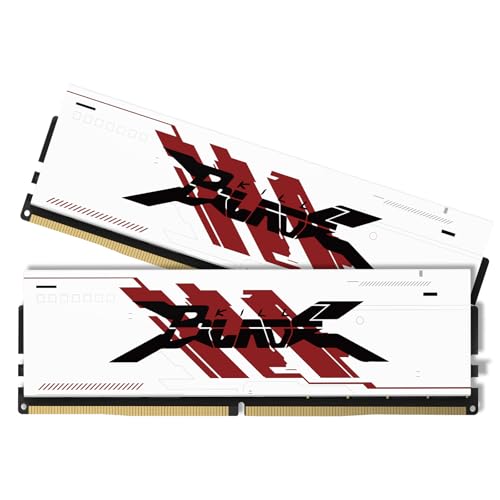
PUSKILL 16GB DDR4 3200MHz Desktop RAM
Best for: Desktop gaming and video editing rigs
- Total Capacity
- 16GB
- Memory Speed
- 3200MHz
- CAS Latency
- CL16
- Voltage
- 1.35V
- Module Configuration
- 2x8GB
- Form Factor
- UDIMM
View on Amazon: PUSKILL 16GB DDR4 3200MHz Desktop RAM Affiliate link
This is a 16GB desktop memory kit configured as two 8GB modules. It operates at 3200MHz with a tight CL16 latency. The modules include an aluminum heatsink to manage heat during heavy loads. You need to enable XMP or DOCP in your BIOS to reach the full speed. It fits standard 288-pin desktop slots and supports dual-channel architecture for better bandwidth.
Pros
- 3200MHz speed with CL16 timing for responsive multitasking
- Aluminum heatsink dissipates heat during intensive tasks
- Dual-channel kit doubles memory bandwidth
- Compatible with major Intel and AMD motherboards
Cons
- Requires BIOS configuration to reach advertised speed
- Not compatible with laptop SODIMM slots
- Heatsink adds bulk to the module profile
Good fit if
- You build a desktop PC for gaming or video editing
- You need dual-channel memory for higher bandwidth
- You want a kit with a heat spreader
Skip if
- You are upgrading a laptop with SODIMM slots
- You prefer plug-and-play memory without BIOS changes
- You need a single 16GB stick instead of a pair
Verdict: PUSKILL 16GB DDR4 3200MHz CL16 Desktop is a solid choice for desktop builders who need reliable dual-channel performance and thermal management for demanding applications.
Specifications side by side
| Spec | PUSKILL 16GB DDR4 3200MHz SODIMM | PUSKILL 16GB DDR4 3200MHz Desktop RAM |
|---|---|---|
| Total Capacity | 16GB | 16GB |
| Memory Speed | 3200MHz | 3200MHz |
| CAS Latency | CL22 | CL16 |
| Voltage | not stated | 1.35V |
| Module Configuration | 1x16GB | 2x8GB |
| Form Factor | SODIMM | UDIMM |
| ECC Support | not stated | Non-ECC |
| Compatible Device | Laptop | Desktop, PC |
| Weight | not stated | 6.38 ounces |
| Size | 16GB (1×16GB) | 16GB (2×8GB) |
| Color | 16GB (1×16GB) | 16GB (2×8GB) |
| Model | DDR4 RAM 16GB(1×16GB)3200HMz SODIMM | not stated |
Frequently asked questions
Can I use the PUSKILL 16GB DDR4 3200MHz SODIMM in a desktop computer?
No, you cannot. This module uses the SODIMM form factor, which is designed specifically for laptops and small form-factor devices. Desktop motherboards require standard DIMM slots. Using the wrong form factor will prevent the memory from fitting or functioning in your desktop system.
What is the difference in CAS latency between these two kits?
The desktop kit has a lower CAS latency of CL16, while the SODIMM kit runs at CL22. Lower latency generally means faster response times for data access. This makes the desktop version potentially more responsive for demanding tasks like gaming or video editing compared to the laptop module.
Does the desktop kit come as a single stick or two sticks?
The desktop kit includes two 8GB sticks for a total of 16GB. This dual-channel configuration can improve bandwidth compared to a single stick. The SODIMM version, by contrast, comes as a single 16GB module, which may limit performance gains in systems that support dual-channel memory.
Is the SODIMM version suitable for gaming laptops?
It fits gaming laptops physically, but the higher CL22 latency may not provide the best performance for high-end gaming. The verdict suggests it is better for basic speed boosts in daily tasks. For serious gaming, you might prefer a lower latency option or ensure your laptop supports the speed well.
How much does the desktop RAM kit weigh?
The desktop RAM kit weighs 6.38 ounces. This weight includes the two 8GB modules and their packaging. Weight is rarely a critical factor for performance, but it helps you understand the physical components included. The SODIMM version does not list a specific weight in the provided data.
Can I mix these two PUSKILL RAM kits together?
You should not mix them. They have different form factors, so they physically cannot fit in the same system simultaneously. Even if you had a hybrid system, the different CAS latencies and configurations could cause stability issues. It is best to use matching kits for consistent performance.