TEAMGROUP vs SP Silicon Power DDR4 RAMs: Which Brand Fits You?
As an Amazon Associate we earn from qualifying purchases. Links on this page are affiliate links.
This TEAMGROUP vs SP Silicon Power ddr4 RAM comparison helps you pick the right module for your desktop. Both are UDIMM sticks for PCs, but they target different needs. The TEAMGROUP Elite offers a single 8GB stick at 2666MHz with standard voltage. The SP Silicon Power Turbine provides a 16GB dual kit at 3200MHz with XMP support. You must decide between base speed and higher capacity with overclocking potential.
Key differences
| Aspect | TEAMGROUP Elite 8GB DDR4 2666MHz UDIMM RAM | Silicon Power Turbine 16GB (2x8GB) 3200MHz DDR4 RAM |
|---|---|---|
| Capacity | 8GB (1x8GB) | 16GB (2x8GB) |
| Memory Speed | 2666MHz | 3200MHz |
| CAS Latency | CL19 | CL16 |
| Voltage | 1.2V | 1.35V |
| Overclocking Profile | not listed | Intel XMP |
| Heat Sink | not listed | Aluminum |
Which one should you choose?
Choose TEAMGROUP Elite 8GB DDR4 2666MHz UDIMM RAM if
- You need a single stick upgrade to 8GB total memory.
- You prefer lower voltage operation at 1.2V for efficiency.
- You want JEDEC standard compatibility without XMP configuration.
Choose Silicon Power Turbine 16GB (2x8GB) 3200MHz DDR4 RAM if
- You require 16GB of RAM for better multitasking performance.
- You want faster speeds at 3200MHz using Intel XMP profiles.
- You need an aluminum heat sink for improved thermal dissipation.
Verdict: Choose the TEAMGROUP Elite if you simply need to add 8GB of standard, low-voltage memory to your system. Pick the SP Silicon Power Turbine if you need 16GB of capacity and want to enable XMP for higher 3200MHz speeds. Your choice depends on whether you prioritize capacity and speed or basic single-stick simplicity.
Specs Compare: Speed and Capacity
Memory Speed
The SP Silicon Power Turbine operates at 3200MHz, which is faster than the TEAMGROUP Elite running at 2666MHz. Higher frequency allows for quicker data transfer between the memory and your processor. This speed difference matters most for demanding tasks like gaming or video editing. The TEAMGROUP module sticks to the standard 2666MHz baseline, which is sufficient for general office work. You will notice the SP Silicon Power kit provides more bandwidth for intensive applications.
Capacity
You get 16GB total with the SP Silicon Power Turbine, split across two 8GB sticks. The TEAMGROUP Elite provides only 8GB in a single stick. More capacity helps when you run many programs at once or edit large files. The dual-channel setup in the SP Silicon Power kit also boosts performance over single-channel configurations. If you need to multitask heavily, the larger 16GB kit is the better choice for your system.
CAS Latency
The SP Silicon Power Turbine features a CAS Latency of CL16, while the TEAMGROUP Elite sits at CL19. Lower latency means the memory responds faster to requests from your CPU. This can improve system responsiveness in everyday use. The 3-clock difference in latency gives the SP Silicon Power module a slight edge in timing efficiency. Both are non-ECC modules, so this spec directly impacts how quickly data is retrieved.
Voltage
The TEAMGROUP Elite runs at 1.2V, which is the standard voltage for DDR4 memory. The SP Silicon Power Turbine requires 1.35V to achieve its higher speeds. Lower voltage typically means less heat generation and slightly better power efficiency. If you prioritize energy savings or cooler operating temperatures, the TEAMGROUP stick is the more efficient option. The higher voltage in the SP Silicon Power kit supports its overclocking capabilities.
Overclocking Profile
The SP Silicon Power Turbine supports Intel XMP profiles, allowing you to easily enable higher speeds in your BIOS. The TEAMGROUP Elite relies on standard JEDEC specifications without mentioned overclocking profiles. XMP makes it simple to get the advertised 3200MHz performance without manual tweaking. If you want plug-and-play speed boosts, the SP Silicon Power kit is the superior choice for your desktop setup.
Which DDR4 RAM Kit Fits Your Build
Users needing basic single stick capacity
Choose the TEAMGROUP Elite if you only need one stick. It provides 8GB of capacity at 2666MHz. The CL19 latency and 1.2V voltage offer standard performance. This single-channel module is ideal for budget builds or upgrading a system that requires only one additional memory stick.
Users seeking higher speed and dual channel
Pick the Silicon Power Turbine for better performance. It offers 16GB total capacity via two 8GB sticks. The 3200MHz speed and CL16 latency provide faster data transfer. The aluminum heat sink helps with thermals, and Intel XMP support allows you to easily enable these higher speeds in your BIOS.
Users wanting overclocking support and heat dissipation
The Silicon Power Turbine includes an aluminum heat sink for better thermal management. It supports Intel XMP profiles, making it easier to achieve advertised speeds of 3200MHz. The 1.35V operating voltage is standard for performance modules. This kit is a solid choice for users who want to optimize their desktop memory performance.
The products compared
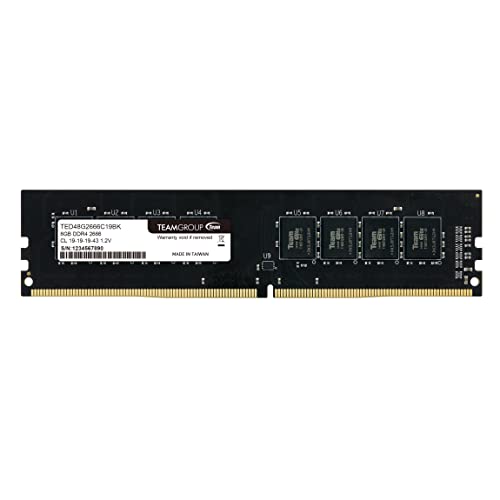
TEAMGROUP Elite 8GB DDR4 2666MHz UDIMM RAM
Best for: basic DDR4 desktop upgrades
- Total Capacity
- 8GB
- Memory Speed
- 2666MHz
- CAS Latency
- CL19
- Voltage
- 1.2V
- Module Configuration
- 1x8GB
- Form Factor
- UDIMM
View on Amazon: TEAMGROUP Elite 8GB DDR4 2666MHz UDIMM RAM Affiliate link
This TEAMGROUP Elite stick offers 8GB of DDR4 memory running at 2666MHz. It uses a standard 1.2V voltage and features CL19 latency. The module is a single-channel UDIMM designed for desktop PCs. It meets JEDEC specifications and holds QVL approval from major motherboard makers. You should choose this if you need a basic, compatible upgrade for older systems that support DDR4.
Pros
- 8GB single-stick capacity
- 2666MHz memory speed
- 1.2V low operating voltage
- QVL approved for compatibility
Cons
- Single channel configuration limits bandwidth
- 8GB capacity is small for modern workloads
- 2666MHz speed is slower than DDR5 standards
Good fit if
- You are upgrading an older desktop PC
- You need a single stick for a dual-slot system
- You want JEDEC-compliant basic memory
Skip if
- You require dual-channel performance
- You are building a new DDR5 system
- You need more than 8GB per stick
Verdict: TEAMGROUP Elite 8GB DDR4 2666MHz is a safe, compatible choice for basic desktop upgrades. It fits users who prioritize motherboard compatibility over high speed or capacity.

Silicon Power Turbine 16GB (2x8GB) 3200MHz DDR4 RAM
Best for: Intel desktops needing reliable 16GB DDR4 memory
- Total Capacity
- 16GB
- Memory Speed
- 3200MHz
- CAS Latency
- CL16
- Voltage
- 1.35V
- Module Configuration
- 2x8GB
- Form Factor
- UDIMM
View on Amazon: Silicon Power Turbine 16GB (2x8GB) 3200MHz DDR4 RAM Affiliate link
This SP Silicon Power Turbine kit offers 16GB of DDR4 memory in a 2x8GB configuration. It runs at 3200MHz with a CAS latency of CL16. The modules feature an aluminum heat sink and operate at 1.35V. It supports Intel XMP profiles for easy overclocking. This desktop memory is designed for users seeking reliable performance with standard voltage requirements.
Pros
- 16GB capacity provided via 2x8GB modules
- 3200MHz speed with CL16 timing
- Aluminum heat sink for thermal management
- Supports Intel XMP for profile-based speeds
Cons
- Only supports Intel XMP, lacking AMD EXPO
- Standard blue color option only
- Requires manual BIOS configuration for advertised speeds
Good fit if
- You need 16GB of DDR4 RAM for a desktop PC
- You use an Intel-based system for XMP support
- You want a budget-friendly kit with an aluminum heatsink
Skip if
- You require DDR5 memory for newer platforms
- You need AMD EXPO profile support
- You prefer RGB lighting effects on your RAM
Verdict: SP Silicon Power Turbine 16GB DDR4 3200MHz provides solid base performance for Intel desktops. It fits users who prioritize value and standard heat dissipation over RGB aesthetics or AMD-specific features.
Specifications side by side
| Spec | TEAMGROUP Elite 8GB DDR4 2666MHz UDIMM RAM | Silicon Power Turbine 16GB (2x8GB) 3200MHz DDR4 RAM |
|---|---|---|
| Total Capacity | 8GB | 16GB |
| Memory Speed | 2666MHz | 3200MHz |
| CAS Latency | CL19 | CL16 |
| Voltage | 1.2V | 1.35V |
| Module Configuration | 1x8GB | 2x8GB |
| Form Factor | UDIMM | UDIMM |
| ECC Support | Non-ECC | not stated |
| Height | 1.97 inches | not stated |
| Compatible Device | Desktop, PC | Desktop |
| Dimensions | 5.91 × 3.94 × 1.97 inches | 7 × 4.5 × 0.5 inches |
| Weight | 1.06 ounces | 1.45 ounces |
| Size | 8GB Kit (1x8GB) | 2x8GB 3200MHz CL16 |
| Color | Single Channel | Blue |
| Model | TED48G2666C1901 | SP016GXLZU320BDA |
Frequently asked questions
Can I mix TEAMGROUP and SP Silicon Power RAM sticks together?
You can mix them, but it is not recommended. Both are UDIMM modules, so they fit standard desktop slots. However, their speeds differ. The TEAMGROUP runs at 2666MHz while the SP Silicon Power runs at 3200MHz. Mixing them may force the faster stick to slow down to match the slower one. This reduces overall performance.
Which RAM kit is better for Intel desktops?
The SP Silicon Power Turbine is a strong choice for Intel builds. It offers 16GB capacity in a dual-channel configuration. The 3200MHz speed and CL16 latency provide solid base performance. It uses 1.35V voltage, which is standard for higher-frequency DDR4. This kit prioritizes value and reliable heat dissipation for standard Intel motherboards.
Does the TEAMGROUP Elite support ECC memory?
No, the TEAMGROUP Elite does not support ECC. It is a Non-ECC module designed for standard desktop PCs. This means it lacks the error-correction features found in server-grade memory. For most users, this is fine. It prioritizes compatibility and basic upgrades over advanced error handling capabilities.
What is the voltage requirement for these DDR4 kits?
The TEAMGROUP Elite requires 1.2V, which is the standard JEDEC voltage. The SP Silicon Power Turbine uses 1.35V. Higher voltage often supports higher speeds. The 1.2V stick is more power-efficient. The 1.35V stick offers faster performance. Choose based on whether you prioritize efficiency or speed.
Which RAM has lower CAS Latency?
The SP Silicon Power Turbine has lower CAS Latency. It features CL16 timing. The TEAMGROUP Elite has CL19 timing. Lower latency means the memory responds faster to commands from the CPU. This can improve responsiveness in certain tasks. The SP kit offers tighter timings alongside its higher frequency.
Is the SP Silicon Power Turbine single or dual channel?
The SP Silicon Power Turbine is a dual-channel kit. It comes as two 8GB sticks. This configuration allows for wider data transfer paths compared to single-channel modules. Dual-channel performance is generally better for multitasking and gaming. The TEAMGROUP Elite is a single 8GB stick, which runs in single-channel mode.