Timetec vs Kingston DDR4 RAMS: Which Brand Fits You?
As an Amazon Associate we earn from qualifying purchases. Links on this page are affiliate links.
When comparing timetec vs kingston ddr4 RAM, you are looking at two distinct paths. Both brands offer DDR4 memory with lifetime warranties and free technical support. However, their target use cases diverge significantly. Timetec focuses on desktop systems with standard unbuffered modules. Kingston targets server environments with registered ECC memory. This difference in architecture defines which system each kit supports and how it handles data integrity.
Key differences
| Aspect | Timetec 32GB DDR4 3200MHz UDIMM Memory | Kingston 64GB DDR4 ECC REG Server Kit |
|---|---|---|
| Compatible Device | Desktop | Server |
| Form Factor | UDIMM | Registered DIMM |
| ECC Support | Non-ECC | ECC |
| Memory Speed | 3200MHz | 2133MHz |
| CAS Latency | CL22 | CL15 |
| Overclocking Profile | Non-XMP | not listed |
Which one should you choose?
Choose Timetec 32GB DDR4 3200MHz UDIMM Memory if
- You need memory for a standard desktop PC.
- You require higher clock speeds for general computing.
- You want a non-ECC configuration for consumer hardware.
Choose Kingston 64GB DDR4 ECC REG Server Kit if
- You are building or upgrading a server system.
- You need Registered DIMM compatibility for enterprise boards.
- You require ECC support for data integrity in critical applications.
Verdict: Choose the Timetec kit if you are upgrading a consumer desktop and need standard UDIMM compatibility. Select the Kingston kit if you are working with server infrastructure that requires Registered ECC memory. The right choice depends entirely on whether your motherboard supports standard or registered DIMMs.
Timetec vs Kingston DDR4 Comparison
compatible device
You must match the memory to your hardware type. Timetec is designed for selected DDR4 desktop computers. It explicitly states it is not for laptop, notebook, mini PC, or all-in-one devices. Kingston targets server environments. Its Registered DIMM form factor and ECC support are built for enterprise workloads. If you are building a standard desktop PC, Timetec fits your needs. If you are running a server that requires registered memory, Kingston is the correct choice. Using the wrong type can prevent your system from booting entirely.
memory speed
Timetec offers a base speed of 3200MHz. It can downclock to 2933MHz or 2666MHz if your system motherboard does not support the higher rate. This provides flexibility for various desktop platforms. Kingston operates at 2133MHz. This lower frequency is standard for many older server architectures. For desktop users seeking faster data transfer rates for gaming or content creation, Timetec provides a significant performance advantage. Server administrators will find Kingston’s speed appropriate for their specific enterprise requirements, but it is slower than the desktop option.
ecc support
Error Correction Code (ECC) helps prevent data corruption. Timetec uses Non-ECC memory. This is standard for consumer desktops where cost and compatibility are priorities. Kingston includes ECC support. This feature detects and fixes memory errors, which is critical for servers handling sensitive data. If you run a workstation or server where data integrity is paramount, Kingston’s ECC capability is essential. For a home desktop or gaming rig, Non-ECC is sufficient and often required by consumer motherboards. This distinction dictates which system can actually use the module.
form factor
The physical connector and internal architecture differ greatly. Timetec uses a 288-pin Unbuffered DIMM (UDIMM). This is the standard module for consumer desktops. Kingston uses a 240-pin Registered DIMM. The pin count is different, meaning it will not fit into a standard desktop motherboard slot. The registered buffer also changes how the memory interacts with the CPU. You must choose based on your motherboard’s socket type. A desktop build requires Timetec’s UDIMM. A server build requires Kingston’s Registered DIMM. They are not interchangeable.
cas latency
CAS Latency (CL) measures the delay before data is accessed. Timetec has a CL of 22. Kingston has a CL of 15. Lower numbers generally indicate faster response times. However, Kingston’s lower latency is offset by its much lower base speed of 2133MHz compared to Timetec’s 3200MHz. In a server context, Kingston’s CL15 is optimized for its architecture. In a desktop context, Timetec’s higher speed often outweighs the higher latency for general responsiveness. The lower CL on Kingston is a spec advantage, but it applies to a different use case.
Choose the right RAM for your setup
Desktop user needing high capacity single stick
You need a single 32GB module for a desktop PC. This Timetec UDIMM offers 3200MHz speed with CL22 latency. It runs at 1.2V and does not require XMP profiles. It downclocks to 2933MHz or 2666MHz if your system supports lower speeds. It is not for laptops or mini PCs.
Server admin requiring error correction and large capacity
You need 64GB of ECC registered memory for a server. This Kingston kit provides four 16GB modules running at 2133MHz. It features CL15 latency and uses 240-pin DIMMs. The ECC support ensures data integrity in critical server environments. It is built for efficiency and power savings in professional hardware.
Budget desktop builder wanting flexible speed options
You want standard desktop memory that adapts to your motherboard. This Timetec stick runs at 3200MHz but can downclock to 2933MHz or 2666MHz. It uses Non-ECC unbuffered memory suitable for general desktop use. The 1.2V voltage and CL22 timing offer reliable performance without complex XMP configuration for standard builds.
The products compared

Timetec 32GB DDR4 3200MHz UDIMM Memory
Best for: Single-stick desktop memory upgrades
- Total Capacity
- 32GB
- Memory Speed
- 3200MHz
- CAS Latency
- CL22
- Voltage
- 1.2V
- Module Configuration
- 1x32GB
- Form Factor
- UDIMM
View on Amazon: Timetec 32GB DDR4 3200MHz UDIMM Memory Affiliate link
This Timetec kit provides 32GB of DDR4 memory running at 3200MHz. It uses a 1.2V voltage and CL22 latency. The module is non-ECC and unbuffered, designed for standard desktop PCs. It does not support laptop or mini PC systems. You can use it to upgrade desktop storage. The kit operates without XMP profiles, relying on standard JEDEC timings for compatibility.
Pros
- 3200MHz memory speed
- 32GB total capacity
- 1.2V low voltage operation
- Compatible with 2933MHz and 2666MHz systems
Cons
- Single stick configuration limits dual-channel performance
- Non-ECC design unsuitable for server workloads
- No XMP support for easy overclocking
Good fit if
- You need a single high-capacity stick for desktop upgrades
- You prioritize standard JEDEC compatibility over overclocking
- You require 32GB of non-ECC memory
Skip if
- You are building a server with ECC requirements
- You need a matched kit for dual-channel performance
- You are upgrading a laptop or mini PC
Verdict: Timetec 32GB DDR4 3200MHz Desktop RAM suits users needing a single large-capacity stick for standard desktop builds who value stability over overclocking flexibility.
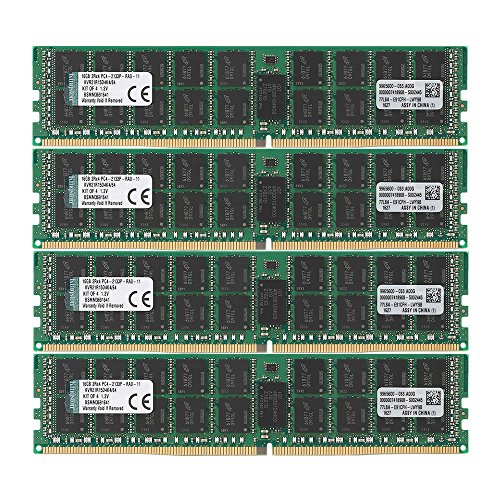
Kingston 64GB DDR4 ECC REG Server Kit
Best for: Server systems requiring 64GB ECC memory
- Total Capacity
- 64GB
- Memory Speed
- 2133MHz
- CAS Latency
- CL15
- Module Configuration
- 4x16GB
- Form Factor
- DIMM
- ECC Support
- ECC Reg
View on Amazon: Kingston 64GB DDR4 ECC REG Server Kit Affiliate link
This Kingston kit provides 64GB of DDR4 memory across four 16GB modules. It runs at 2133MHz with CL15 latency. The modules feature ECC and registered DIMM technology. This configuration is designed specifically for server environments. You get efficient power usage due to lower voltage requirements. The kit includes a lifetime warranty and free technical support from the manufacturer.
Pros
- 64GB total capacity via 4x16GB modules
- ECC and Registered DIMM technology for stability
- 2133MHz speed with CL15 latency
- Lifetime warranty and free technical support
Cons
- 2133MHz speed is slower than modern standards
- ECC Registered DIMM is incompatible with standard desktop PCs
- Only four slots are populated for 64GB total
Good fit if
- You need 64GB of RAM for a server
- You require ECC memory for data integrity
- You are building a workstation that supports registered DIMMs
Skip if
- You are building a standard desktop computer
- You need high-speed gaming memory
- You require non-ECC unbuffered memory
Verdict: Kingston 64GB DDR4 ECC Reg Server RAM is a stable solution for servers needing large memory pools. It suits IT professionals managing enterprise hardware rather than home users.
Specifications side by side
| Spec | Timetec 32GB DDR4 3200MHz UDIMM Memory | Kingston 64GB DDR4 ECC REG Server Kit |
|---|---|---|
| Total Capacity | 32GB | 64GB |
| Memory Speed | 3200MHz | 2133MHz |
| CAS Latency | CL22 | CL15 |
| Voltage | 1.2V | not stated |
| Module Configuration | 1x32GB | 4x16GB |
| Form Factor | UDIMM | DIMM |
| ECC Support | Non-ECC | ECC Reg |
| Compatible Device | Desktop, PC | Server |
| Size | 32GB | 64GB |
| Dimensions | not stated | 13 × 4.5 × 0.1 inches |
| Weight | not stated | 0.35 ounces |
| Color | Black | Multicolor |
| Model | not stated | KVR21R15D4K4/64 |
Frequently asked questions
Can I use Timetec DDR4 RAM in my laptop?
No. The Timetec 32GB DDR4 UDIMM is designed specifically for desktop computers. It is not compatible with laptops, notebooks, mini PCs, or all-in-one devices. You must ensure your system uses standard desktop memory slots before purchasing this single-stick module.
Does the Kingston server RAM work in standard desktop PCs?
Likely not. The Kingston 64GB kit is an ECC Registered DIMM intended for server environments. Standard desktop motherboards typically do not support registered ECC memory. Using this kit in a home PC may result in compatibility issues or failure to boot.
Which brand offers higher memory speed for desktops?
Timetec offers higher speed for desktop use. The Timetec 32GB module runs at 3200MHz. Kingston’s server kit operates at 2133MHz. If you need faster data transfer rates for standard desktop applications, the Timetec option provides a clear performance advantage in clock speed.
Is ECC memory necessary for my home gaming PC?
No. ECC memory, like the Kingston kit, is designed to correct data errors in critical server environments. Most home gaming PCs and standard desktops do not require or support ECC. Standard non-ECC memory, such as the Timetec option, is sufficient for typical consumer tasks.
What is the CAS latency difference between these kits?
The Kingston server kit has a lower CAS latency of CL15. The Timetec desktop module has a CAS latency of CL22. Lower latency can improve response times, but server RAM prioritizes stability and error correction over the raw speed metrics found in desktop modules.
Can I mix Timetec and Kingston RAM in the same system?
It is not recommended. These modules have different form factors and specifications. The Timetec is a UDIMM for desktops, while the Kingston is an ECC Registered DIMM for servers. Mixing incompatible types will prevent your system from recognizing the memory or booting correctly.
Which RAM is better for a single large upgrade?
Timetec is better for single large desktop upgrades. It provides a 32GB single stick with 3200MHz speed. The Kingston kit is a 64GB server package. If you are upgrading a desktop and need a simple, high-capacity single module, the Timetec option fits that specific need.