UDIMM vs LRDIMM DDR4 RAMS: Which Should You Buy?
As an Amazon Associate we earn from qualifying purchases. Links on this page are affiliate links.
When comparing UDIMM vs LRDIMM ddr4 RAM, you face two distinct paths for system memory. Both modules use the 288-pin DDR4 standard and operate within similar voltage ranges. However, their intended environments differ significantly. The UDIMM option is built for desktop and gaming PCs, prioritizing speed. The LRDIMM variant is engineered for servers and workstations, focusing on capacity and stability. Understanding these differences helps you pick the right hardware for your specific needs.
Key differences
| Aspect | G.SKILL Trident Z RGB 16GB DDR4 RAM Kit | Nemix RAM 32GB DDR4 2133MHz ECC LRDIMM |
|---|---|---|
| Form Factor | UDIMM | LRDIMM |
| Compatible Device | Desktop, PC | Server |
| Memory Speed | Up to 3000MT/s | 2133MHz |
| ECC Support | Non-ECC | ECC |
| Voltage | 1.35V | 1.2V |
| Overclocking Profile | Intel XMP | not listed |
Which one should you choose?
Choose G.SKILL Trident Z RGB 16GB DDR4 RAM Kit if
- You are building or upgrading a desktop PC or gaming rig.
- You need higher memory speeds for responsive performance.
- You want to use Intel XMP for easy overclocking.
Choose Nemix RAM 32GB DDR4 2133MHz ECC LRDIMM if
- You are configuring a server or high-capacity workstation.
- You require ECC memory for data integrity and error correction.
- You need to maximize capacity per channel with load-reduced buffering.
Verdict: Choose the UDIMM kit if you are building a desktop or gaming system where speed and overclocking matter. Select the LRDIMM module for server or workstation environments that demand high capacity and error-correcting code reliability. Your motherboard's compatibility dictates which form factor you can actually install.
UDIMM vs LRDIMM: Key Differences
compatible device
Product A is a G.SKILL Trident Z RGB kit designed specifically for desktop PCs and gaming systems. You will find it in consumer motherboards where performance and aesthetics matter most. Product B is a NEMix module built for servers and high-density workstations. Its LRDIMM form factor targets environments that require maximum memory capacity per channel, such as virtualization or in-memory databases. You must check your motherboard manual to confirm support. If you are building a gaming rig, Product A fits. If you are expanding a server, Product B is the correct choice.
memory speed
Speed defines how quickly data moves between the CPU and RAM. Product A offers a memory speed of up to 3000MT/s. This higher frequency benefits gaming and latency-sensitive desktop tasks. Product B operates at 2133MHz. While slower, this speed is standard for many server workloads where stability and capacity outweigh raw bandwidth. The difference is significant for gaming but less critical for large data processing tasks. You choose Product A for faster response times and Product B for consistent server operation.
ecc support
Error Correcting Code (ECC) detects and fixes memory errors automatically. Product A is Non-ECC, meaning it does not correct bit flips. This is typical for consumer desktops where occasional data corruption is rare. Product B includes ECC support, ensuring data integrity for critical server applications. If you run a database or virtual machine, Product B protects your data. If you game or use a standard PC, Product A is sufficient. This feature is essential for enterprise environments but optional for home users.
cas latency
CAS Latency (CL) measures the delay before data is accessed. Product A lists a CAS Latency of CL16. This lower latency contributes to quicker response times in desktop applications. Product B does not list a specific CAS Latency value in the provided data. Generally, server memory prioritizes capacity and stability over tight timing. You benefit from Product A's CL16 for snappy desktop performance. The lack of CL data for Product B suggests it is optimized for throughput rather than low latency.
overclocking profile
Overclocking allows you to push memory beyond its base speed. Product A includes an Intel XMP profile, enabling easy speed increases via BIOS settings. This is ideal for desktop enthusiasts who want to maximize performance. Product B is an LRDIMM server module, which typically does not support XMP or aggressive overclocking. It is designed to run at its rated 2133MHz for stability. You should choose Product A if you plan to tweak your system. Product B is best left at its default settings for reliability.
voltage
Voltage affects power consumption and heat generation. Product A operates at 1.35V, which is standard for DDR4 memory at higher speeds. This slight increase supports the 3000MT/s performance. Product B runs at 1.2V, the standard DDR4 voltage. This lower voltage reduces power draw, which is beneficial in servers with many memory slots. You will notice a minor difference in power usage. Product B is more energy-efficient, while Product A uses slightly more power for higher performance.
Which DDR4 RAM Kit Fits Your Needs
Desktop gamers and overclockers
You need high-speed memory for gaming. This G.SKILL kit offers up to 3000MT/s with CL16 latency. It supports Intel XMP for easy overclocking. The 1.35V voltage ensures stable performance in desktop PCs. It is a matched 2x8GB kit designed for consumer motherboards.
Server administrators and workstation users
You require high capacity and data integrity for servers. This NEMix module provides 32GB with ECC support to correct errors. The LRDIMM form factor reduces electrical load, allowing higher density. It runs at 2133MHz with 1.2V voltage, ideal for 24/7 multi-socket workloads and virtualization tasks.
Users building high-capacity systems
You need maximum memory density per channel. The LRDIMM design supports high-DIMM-count boards, reaching capacities up to 256GB or more when populated fully. This ECC-protected memory ensures reliability for in-memory databases. It is specifically engineered for server and workstation platforms that support this specialized form factor.
Quick picks
| # | Product | Best for | Price |
|---|---|---|---|
| 1 | G.SKILL Trident Z RGB 16GB DDR4 RAM Kit | Desktop gaming and high-speed overclocking | Check price of G.SKILL Trident Z RGB 16GB DDR4 RAM Kit on Amazon |
| 2 | Nemix RAM 32GB DDR4 2133MHz ECC LRDIMM | Server memory expansion with ECC | Check price of Nemix RAM 32GB DDR4 2133MHz ECC LRDIMM on Amazon |
The products compared

G.SKILL Trident Z RGB 16GB DDR4 RAM Kit
Best for: Desktop gaming and high-speed overclocking
- Form Factor
- UDIMM (what this guide is about)
- Total Capacity
- 16GB
- Memory Speed
- 3000MT/s
- CAS Latency
- CL16
- Voltage
- 1.35V
- Module Configuration
- 2x8GB
View on Amazon: G.SKILL Trident Z RGB 16GB DDR4 RAM Kit Affiliate link
This G.SKILL kit is a 16GB DDR4 U-DIMM set designed for desktop PCs. It features a 2x8GB configuration with a speed of up to 3000MT/s. The modules run at 1.35V and include an Intel XMP profile for easy overclocking. It uses CL16 latency for responsive performance. This non-ECC memory suits gamers and desktop users who want higher speeds than standard JEDEC defaults.
Pros
- 288-pin U-DIMM form factor for standard desktops
- Up to 3000MT/s speed with Intel XMP support
- Low CL16 latency for faster data access
- 1.35V operating voltage for efficient power use
Cons
- Non-ECC technology lacks error correction for data integrity
- 16GB total capacity may limit heavy multitasking
- Requires BIOS adjustments to reach maximum speed
Good fit if
- You need a standard U-DIMM kit for a desktop PC
- You want faster speeds than base JEDEC profiles offer
- You are building a gaming system with compatible hardware
Skip if
- You require ECC memory for server or workstation stability
- You need more than 16GB of total system memory
- You want plug-and-play performance without BIOS changes
Verdict: G.SKILL Trident Z RGB 16GB DDR4 U-DIMM offers high-speed performance for desktop gamers. It fits users who prioritize speed and are willing to adjust BIOS settings for optimal results.
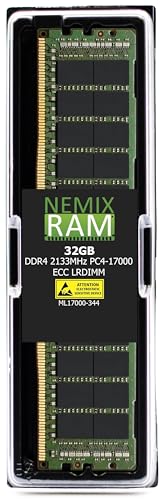
Nemix RAM 32GB DDR4 2133MHz ECC LRDIMM
Best for: Server memory expansion with ECC
- Form Factor
- LRDIMM (what this guide is about)
- Total Capacity
- 32GB
- Memory Speed
- 2133MHz
- Voltage
- 1.2V
- Module Configuration
- 1x32GB
- ECC Support
- ECC
View on Amazon: Nemix RAM 32GB DDR4 2133MHz ECC LRDIMM Affiliate link
This is a single 32GB DDR4-2133 LRDIMM stick with ECC support. It uses a 288-pin form factor designed for servers and high-capacity workstations. The load-reduced buffering lowers electrical load on the memory bus, allowing boards to reach higher capacities per channel. It runs at 1.2V and includes registered ECC protection. You should use this module if your platform specifically supports LRDIMM configurations for virtualization or in-memory databases.
Pros
- 32GB capacity in a single stick for high density
- ECC and registered buffering for data integrity
- 288-pin LRDIMM form factor for server compatibility
- 1.2V voltage for standard server operation
Cons
- 2133MHz speed is lower than modern standards
- Single stick kit limits dual-channel performance
- Not compatible with standard desktop UDIMM slots
Good fit if
- You need to expand server memory capacity
- Your motherboard explicitly supports LRDIMM modules
- You require ECC protection for critical workloads
Skip if
- You are building a standard desktop PC
- Your system only supports UDIMM or RDIMM
- You need high-speed gaming memory
Verdict: Nemix RAM 32GB DDR4 LRDIMM is a specialized server module for users who need high-density ECC memory on compatible motherboards. It fits data centers and workstations requiring stable, large-capacity memory expansion.
Specifications side by side
| Spec | G.SKILL Trident Z RGB 16GB DDR4 RAM Kit | Nemix RAM 32GB DDR4 2133MHz ECC LRDIMM |
|---|---|---|
| Total Capacity | 16GB | 32GB |
| Memory Speed | 3000MT/s | 2133MHz |
| CAS Latency | CL16 | not stated |
| Voltage | 1.35V | 1.2V |
| Module Configuration | 2x8GB | 1x32GB |
| Form Factor | U-DIMM | LRDIMM |
| ECC Support | Non-ECC | ECC |
| Height | 1.7 inches | not stated |
| Compatible Device | Desktop, PC | Server |
| Size | 16GB | 32GB (1X32GB) DDR4 2133MHZ LRDIMM |
| Dimensions | 5.2 × 0.67 × 1.7 inches | 6 × 0.5 × 0.5 inches |
| Weight | 4.8 ounces | 4 ounces |
| Color | Multicolor | 32GB |
| Model | F4-3000C16D-16GTZR | ML17000-344K01-106 |
Frequently asked questions
Can I use LRDIMM in a standard desktop PC?
No, you cannot. LRDIMM modules are designed exclusively for server environments. The Nemix 32GB kit is built for server motherboards that support this specific form factor. Standard desktop PCs use UDIMM modules. You must check your motherboard compatibility before purchasing server-grade memory for a consumer system.
Does LRDIMM include error correction?
Yes, it does. The Nemix LRDIMM module features ECC support to detect and correct data errors. This makes it ideal for servers and workstations requiring high stability. UDIMM kits like the G.SKILL Trident Z RGB do not include this feature, as they prioritize speed for gaming and desktop tasks.
Which RAM is better for overclocking?
UDIMM is the better choice for overclocking. The G.SKILL Trident Z RGB kit supports speeds up to 3000MHz with a CAS latency of CL16. It is designed for desktop users who adjust BIOS settings for performance. LRDIMM modules run at lower speeds, such as 2133MHz, and are not intended for overclocking.
What is the main difference in voltage between these kits?
The voltage difference reflects their intended use. The G.SKILL UDIMM operates at 1.35V to support higher speeds for gaming. The Nemix LRDIMM runs at 1.2V, which is standard for server memory to reduce power consumption and heat. You should match the voltage requirements to your system's capabilities.
Can I mix UDIMM and LRDIMM in the same system?
You should not mix them. These form factors are incompatible in the same memory channel. UDIMM is for desktops, while LRDIMM is for servers. Mixing them can prevent the system from booting or cause instability. You must choose one form factor that matches your motherboard's supported memory type.
How much memory capacity does each type offer?
Capacity varies by module. The G.SKILL UDIMM kit provides 16GB of memory for desktop use. The Nemix LRDIMM module offers 32GB, catering to server memory expansion needs. LRDIMM modules often support higher densities for data centers. You should select the capacity that fits your application requirements.