USB 3.1 vs USB 2.0 USB Flash Drives in 2026: Key Differences
As an Amazon Associate we earn from qualifying purchases. Links on this page are affiliate links.
You are looking at USB 31 vs USB 20 USB flash drive options for different needs. Both drive types store your files, but they differ significantly in speed and design. The Amazon Basics model offers high capacity and fast transfer rates for modern devices. The MOSDART pack provides a basic, waterproof solution for smaller files. Understanding these specs helps you pick the right tool for your daily tasks.
Key differences
| Aspect | Amazon Basics 256GB USB 3.1 Retractable Flash Drive | mosDART 16GB Waterproof Flash Drive 10-Pack |
|---|---|---|
| USB Version | USB 3.1 | USB 2.0 |
| Read Speed | Up to 130MB/s | not listed |
| Storage Capacity | 256 GB | 16 GB |
| Pack Quantity | 1 unit | 10 units |
| Design Features | Retractable, no LED | Waterproof, keychain |
Which one should you choose?
Choose Amazon Basics 256GB USB 3.1 Retractable Flash Drive if
- You need to transfer large video files quickly.
- You prefer a single, durable drive with a retractable cap.
- You require high storage capacity for photos and media.
Choose mosDART 16GB Waterproof Flash Drive 10-Pack if
- You need multiple drives for team distribution.
- You require waterproof protection for outdoor use.
- You only need to store small documents and basic files.
Verdict: Choose the Amazon Basics drive if you prioritize speed and high capacity for modern computers. Select the MOSDART pack if you need a bulk supply of small, rugged drives for everyday use. Your decision depends on whether you value performance or quantity and durability.
USB 3.1 vs USB 2.0 Drive Comparison
USB Version
The Amazon Basics drive uses USB 3.1 technology, while the MOSDART model relies on the older USB 2.0 standard. USB 3.1 provides a significantly wider data bus, allowing for much faster data transfer rates compared to USB 2.0. This newer interface is designed for modern high-speed requirements. The USB 2.0 standard is an older specification that supports lower bandwidth. It remains compatible with almost all devices but cannot match the throughput of newer interfaces. You will notice a clear difference in how quickly files move between the drive and your computer based on which version you choose.
Transfer Speed
Speed is where the difference becomes most apparent. The Amazon Basics drive offers read speeds up to 130MB/s and write speeds up to 30MB/s. These figures are based on internal tests under controlled conditions. The MOSDART drive does not list specific read or write speeds in its published data. Because it uses USB 2.0, its practical speeds will be much lower, likely capped near the 40MB/s limit of that interface. If you need to move large video files or many photos quickly, the higher speeds of the USB 3.1 drive will save you considerable time.
Storage Capacity
Capacity requirements vary by user. The Amazon Basics option provides 256GB of storage, which is sufficient for thousands of photos or hours of video. The MOSDART drive in this comparison comes with 16GB of space. This smaller capacity is suitable for documents or small files but fills up very quickly with media. The Amazon Basics drive allows you to store more content without needing to manage space frequently. The MOSDART 16GB size is better suited for temporary transfers or as a backup for essential small files rather than long-term media storage.
Form Factor
The physical design of each drive suits different carrying habits. The Amazon Basics model features a retractable, telescopic design that hides the connector to protect it. It measures 2.24 inches in length and includes a keyhole. The MOSDART drive is a small, solid stick measuring 1.57 inches in length. It comes with a keychain attachment and is described as waterproof. The retractable design of the Amazon Basics drive protects the port without a cap, while the MOSDART’s waterproof build and keychain offer durability and easy attachment to keys or bags.
Pack Quantity
You are looking at single units versus bulk packs. The Amazon Basics product is sold as a single 256GB drive. The MOSDART product is sold as a pack of 10 drives, each with 16GB capacity. If you need multiple drives for different computers or to distribute to several people, the MOSDART pack offers more units. The Amazon Basics single drive is better if you need maximum capacity in one device. The choice depends on whether you prioritize individual capacity or the number of devices you can equip.
Which USB Flash Drive Fits Your Needs
Users needing fast large file transfers
The Amazon Basics drive offers USB 3.1 connectivity with read speeds up to 130MB/s. This allows you to move large video files quickly. Its 256GB capacity stores extensive media libraries. The retractable design protects the connector. You get high performance and ample space for modern storage demands.
Buyers wanting bulk low cost drives
The MOSDART option comes in a pack of ten USB 2.0 drives. This provides multiple units for everyday tasks. Each drive holds 16GB, suitable for documents and small files. The waterproof build adds durability. You receive a large quantity of reliable, basic storage solutions for shared use.
People prioritizing speed and capacity
You should choose this drive for its superior transfer rates and high capacity. The 256GB size handles extensive photo and video collections. USB 3.1 ensures compatibility with modern ports while maintaining backward support. The telescopic design offers protection without needing a separate cap. It is ideal for heavy data usage.
Quick picks
| # | Product | Best for | Price |
|---|---|---|---|
| 1 | Amazon Basics 256GB USB 3.1 Retractable Flash Drive | everyday file transfers on USB 3.1 ports | Check price of Amazon Basics 256GB USB 3.1 Retractable Flash Drive on Amazon |
| 2 | mosDART 16GB Waterproof Flash Drive 10-Pack | bulk distribution of small files | Check price of mosDART 16GB Waterproof Flash Drive 10-Pack on Amazon |
The products compared
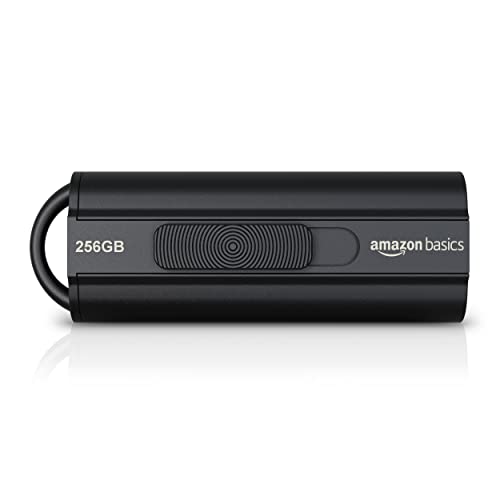
Amazon Basics 256GB USB 3.1 Retractable Flash Drive
Best for: everyday file transfers on USB 3.1 ports
- USB Version
- USB 3.1 (what this guide is about)
- Storage Capacity
- 256 GB
- Read Speed
- Up to 130.0 MB/s
- Dimensions
- 2.24 × 0.79 × 0.53 inches
- Weight
- 0.32 ounces
View on Amazon: Amazon Basics 256GB USB 3.1 Retractable Flash Drive Affiliate link
This Amazon Basics flash drive provides 256 GB of storage over a USB 3.1 interface. You get read speeds up to 130 MB/s and write speeds up to 30 MB/s when connected to a compatible port. It features a retractable connector and comes formatted in FAT32. It fits you if you transfer large media files.
Pros
- Read speeds reach up to 130 MB/s on USB 3.1 ports
- 256 GB capacity stores up to 978 minutes of 1080p video
- Retractable slider protects connector without a separate cap
Cons
- Write speed tops out at 30 MB/s
- No integrated LED activity indicator
- Default FAT32 format requires reformatting for files over 4 GB
Good fit if
- You need read speeds up to 130 MB/s on modern USB 3.1 ports.
- You want 256 GB of storage without managing a removable cap.
Skip if
- You need write speeds exceeding 30 MB/s for frequent file saves.
- You require an LED indicator to verify drive activity.
Verdict: Amazon Basics 256 GB USB 3.1 Flash Drive gives you high read performance and capless storage for moving large media collections between USB 3.0 or 3.1 devices.

mosDART 16GB Waterproof Flash Drive 10-Pack
Best for: bulk distribution of small files
- USB Version
- USB 2.0 (what this guide is about)
- Storage Capacity
- 16GB
- Pack Quantity
- 10
- Features
- Waterproof
- Dimensions
- 1.57 × 0.47 × 0.19 inches
View on Amazon: mosDART 16GB Waterproof Flash Drive 10-Pack Affiliate link
This is a 10-pack of 16GB USB 2.0 flash drives. They feature a waterproof build and a silver finish. The drives include a keychain loop for easy attachment. You get ten units in one purchase. The USB 2.0 interface limits transfer speeds. This pack suits users who need bulk storage for basic files. It is ideal for events or giveaways where durability matters more than speed.
Pros
- USB 2.0 interface
- Waterproof construction
- Includes keychain loop
- Pack of 10 drives
- 16GB storage capacity
Cons
- USB 2.0 speed is slower than USB 3.1
- 16GB capacity is limited for large files
- No encryption software included
Good fit if
- You need multiple drives for distribution
- You require waterproof durability for outdoor use
- You store small text or image files
Skip if
- You need fast file transfer speeds
- You require high-capacity storage for video
- You need hardware encryption for security
Verdict: mosDART 16GB USB 2.0 Waterproof Pack is a practical bulk option for distributing basic files. It fits users who prioritize quantity and durability over speed.
Specifications side by side
| Spec | Amazon Basics 256GB USB 3.1 Retractable Flash Drive | mosDART 16GB Waterproof Flash Drive 10-Pack |
|---|---|---|
| Storage Capacity | 256 GB | 16GB |
| USB Version | USB 3.1 | USB 2.0 |
| Read Speed | Up to 130.0 MB/s | not stated |
| Pack Quantity | not stated | 10 |
| Features | not stated | Waterproof |
| Dimensions | 2.24 × 0.79 × 0.53 inches | 1.57 × 0.47 × 0.19 inches |
| Weight | 0.32 ounces | not stated |
| Size | 256 GB | USB 2.0 16GB x 10 |
| Color | Black | Silver |
| Model | LS21USB256G1 | U188-2.0-16-10 |
Frequently asked questions
Is USB 3.1 backward compatible with USB 2.0 ports?
Yes, USB 3.1 drives work in USB 2.0 ports. However, the drive will only operate at USB 2.0 speeds. You will not get the faster transfer rates of USB 3.1 unless both the drive and the port support the newer standard. This allows you to use the drive on older computers safely.
What is the main speed difference between USB 3.1 and USB 2.0?
USB 3.1 offers significantly higher bandwidth than USB 2.0. For example, the Amazon Basics drive reaches read speeds of 130MB/s. USB 2.0 drives, like the mosDART model, are much slower. This makes USB 3.1 better for large files like videos or high-resolution photos.
Which drive is better for transferring large media libraries?
The Amazon Basics 256GB USB 3.1 drive is the better choice. It combines high capacity with fast read speeds of 130MB/s. This setup helps you back up large media libraries quickly. The USB 2.0 option is slower and has less capacity, making it less ideal for heavy data moves.
Are USB 2.0 flash drives still useful in 2026?
Yes, they remain practical for specific tasks. The mosDART 16GB USB 2.0 pack is good for distributing small files in bulk. Its waterproof design adds durability. If you do not need high speed and prioritize quantity or ruggedness, a USB 2.0 drive is a functional option.
How does capacity affect the choice between these USB versions?
Higher capacity drives often pair with faster USB standards. The Amazon Basics model offers 256GB with USB 3.1 connectivity. This combination suits users who store extensive data. USB 2.0 options here are limited to 16GB. You should match the drive capacity to the size of your files.
Does the physical design impact performance?
The design does not change data speed, but it affects usability. The Amazon Basics drive features a retractable connector, which protects the port. The mosDART drives are compact and waterproof. These physical traits help protect the drive during transport, regardless of the USB version inside.
Can I use a USB 3.1 drive for everyday office tasks?
Absolutely. You can use it for documents, spreadsheets, and small files. The fast read speeds ensure quick access to your work. While USB 2.0 handles small files adequately, USB 3.1 provides a smoother experience. It future-proofs your storage for larger files you might add later.