Kingston vs Gigastone: ddr5 RAMs Compared by Specs
As an Amazon Associate we earn from qualifying purchases. Links on this page are affiliate links.
In this kingston vs gigastone ddr5 RAM comparison, you see two 32GB kits built for desktop systems. Both offer 2x16GB modules with CL40 latency. The Kingston Fury Beast runs at 5200MT/s and highlights Intel XMP 3.0 support. The Gigastone kit operates at 4800MHz with a standard 1.1V rating. You need to weigh speed against form factor and voltage requirements for your build.
Key differences
| Aspect | Kingston Fury Beast 32GB 5200MT/s DDR5 RAM | Gigastone 32GB (2x16GB) DDR5 4800MHz UDIMM Kit |
|---|---|---|
| Memory Speed | 5200MT/s | 4800MHz |
| Overclocking Profile | Intel XMP 3.0 | not listed |
| Voltage | not listed | 1.1V |
| Form Factor | Low-profile heat spreader | 288-Pin Unbuffered UDIMM |
| ECC Support | not listed | Non-ECC |
Which one should you choose?
Choose Kingston Fury Beast 32GB 5200MT/s DDR5 RAM if
- You want higher memory speed at 5200MT/s
- You need Intel XMP 3.0 for overclocking
- You prefer a low-profile design for compact cases
Choose Gigastone 32GB (2x16GB) DDR5 4800MHz UDIMM Kit if
- You need explicit voltage ratings at 1.1V
- You require Non-ECC UDIMM specifications
- You want a kit with listed 288-pin details
Verdict: Choose the Kingston Fury Beast if you prioritize higher speeds and modern XMP 3.0 profiles for performance tuning. Select the Gigastone kit if you need explicit voltage and form factor details for compatibility verification. Both provide the same capacity and latency for standard desktop use.
DDR5 RAM Specs Compared
Memory Speed
The Kingston Fury Beast operates at 5200MT/s, while the Gigastone kit runs at 4800MHz. In practical terms, the higher frequency on the Kingston module allows for faster data transfer rates between the memory and the CPU. This difference can improve performance in bandwidth-heavy tasks like video editing or large file transfers. You get a clear advantage in raw throughput with the Kingston option, as the 400MT/s gap is significant for DDR5 standards. The Gigastone speed is sufficient for general desktop use, but the Kingston edge is measurable.
Overclocking Profile
The Kingston Fury Beast explicitly lists Intel XMP 3.0 support in its features and key specs. This standard allows you to easily enable optimized memory timings and frequencies through your motherboard's BIOS. The Gigastone product data does not mention any specific overclocking profile or XMP version. While it may support basic XMP settings, the lack of explicit specification means you cannot be certain of its compatibility or ease of setup. The Kingston kit provides a documented path to higher performance, giving it the edge for users who plan to tune their systems.
Form Factor
The Gigastone kit is specified as a 288-Pin Unbuffered UDIMM. This is the standard form factor for most desktop motherboards, ensuring broad compatibility with mainstream PC builds. The Kingston product data lists physical dimensions but does not explicitly state the form factor in its attributes or key specs. However, Kingston DDR5 desktop modules are typically UDIMMs. Since the Gigastone explicitly confirms this standard classification, it offers clarity for buyers verifying their motherboard slots. The Kingston fit is assumed, but Gigastone is explicit.
Voltage
The Gigastone kit specifies a voltage of 1.1V, which is the standard operating voltage for DDR5 memory. This ensures efficient power usage and compatibility with standard DDR5 power delivery designs on modern motherboards. The Kingston product data does not list the operating voltage in its provided specifications. While DDR5 kits generally run at 1.1V, the absence of this data point for Kingston means you cannot verify it from the provided text alone. The Gigastone specification is more transparent regarding power requirements.
CAS Latency
Both the Kingston Fury Beast and the Gigastone kit share the same CAS Latency of CL40. This timing value indicates the delay in clock cycles before the RAM responds to a command. Since both products operate at CL40, their response times for random data access are comparable. The Kingston runs faster in frequency, but the latency timing is identical. For tasks sensitive to latency rather than bandwidth, you will experience similar performance characteristics from both kits. This aspect results in a tie between the two options.
Which DDR5 RAM kit suits your build best
Users needing faster data transfer speeds
The Kingston Fury Beast offers 5200MT/s memory speed, which is higher than the Gigastone kit's 4800MHz. This increased frequency allows for faster data transfer rates between the memory and the CPU. If you prioritize raw speed for demanding desktop tasks, this Kingston module provides a clear performance advantage through its higher clock rate.
Builds requiring standard UDIMM compatibility
The Gigastone kit is specified as a 288-Pin Unbuffered UDIMM. This form factor is standard for most desktop PCs and ensures broad compatibility with a wide range of systems. If you need a straightforward, non-ECC memory solution that fits standard desktop motherboards without special requirements, this Gigastone kit is the practical choice.
Users seeking optimized overclocking profiles
The Kingston Fury Beast highlights Intel XMP 3.0 support, which improves stability for overclocking. This profile allows you to easily apply optimized settings for increased efficiency. If you plan to tweak your system settings for better performance, the Kingston kit provides the necessary tools to achieve a more stable and efficient overclock compared to the standard Gigastone options.
The products compared
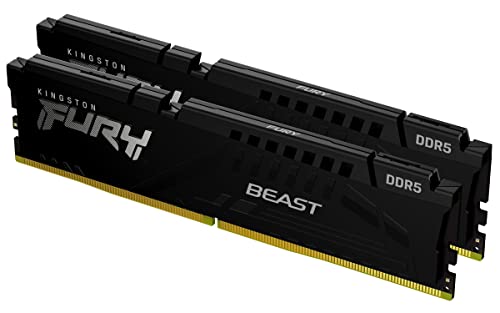
Kingston Fury Beast 32GB 5200MT/s DDR5 RAM
Best for: Compact cases and stable desktop performance
- Capacity
- 32GB
- Memory Speed
- 5200MT/s
- CAS Latency
- CL40
- Kit Configuration
- 2x16GB
- Overclocking Profile
- Intel XMP 3.0
- Compatible Device
- Desktop
View on Amazon: Kingston Fury Beast 32GB 5200MT/s DDR5 RAM Affiliate link
This Kingston FURY Beast kit gives you 32GB of DDR5 memory running at 5200MT/s. It uses a low-profile heat spreader that fits in tight cases. The module supports Intel XMP 3.0 for easy overclocking. You get stable performance for desktop gaming and productivity tasks. The black design keeps your build looking clean.
Pros
- 5200MT/s speed for faster data transfer
- 32GB capacity in a 2x16GB configuration
- Low-profile heat spreader for small cases
- Intel XMP 3.0 support for simple tuning
Cons
- Lower speed than the Gigastone 4800MHz competitor
- Standard CL40 latency rating
- No RGB lighting included
Good fit if
- You need reliable desktop memory for daily tasks
- You have a compact PC case with limited height
- You want a straightforward memory upgrade without extra features
Skip if
- You require RGB lighting for your build aesthetic
- You need the highest possible memory bandwidth available
- You are building a system that requires 64GB of RAM
Verdict: Kingston FURY Beast 32GB DDR5 5200MT/s is a solid choice for users who prioritize low-profile compatibility and stable performance over maximum speed or lighting effects.

Gigastone 32GB (2x16GB) DDR5 4800MHz UDIMM Kit
Best for: Standard desktop builds needing 32GB capacity
- Capacity
- 32GB
- Memory Speed
- 4800MHz
- CAS Latency
- CL40
- Kit Configuration
- 2x16GB
- Form Factor
- 288-Pin Unbuffered UDIMM
- Voltage
- 1.1V
View on Amazon: Gigastone 32GB (2x16GB) DDR5 4800MHz UDIMM Kit Affiliate link
This Gigastone kit offers 32GB of DDR5 memory running at 4800MHz. It uses a standard 1.1V voltage and CL40 latency. The 2x16GB configuration fits most desktop PCs. You get non-ECC unbuffered modules for reliable everyday performance. This option suits users who need solid capacity without chasing the highest speeds. It is a practical choice for standard builds.
Pros
- 32GB total capacity in a 2x16GB kit
- DDR5 4800MHz speed for modern desktops
- Standard 1.1V voltage operation
- CL40 CAS latency timing
Cons
- 4800MHz speed is slower than the 5200MHz option on this list
- CL40 latency is higher than faster kits
- Non-ECC support limits use in specialized servers
Good fit if
- You need 32GB of RAM for multitasking
- You are building a standard desktop PC
- You prioritize capacity over maximum speed
Skip if
- You require speeds above 4800MHz
- You need ECC memory for data integrity
- You want the lowest possible latency
Verdict: Gigastone 32GB DDR5 4800MHz RAM provides reliable 32GB capacity for standard desktops. It fits users who value ample memory over top-tier speed ratings.
Specifications side by side
| Spec | Kingston Fury Beast 32GB 5200MT/s DDR5 RAM | Gigastone 32GB (2x16GB) DDR5 4800MHz UDIMM Kit |
|---|---|---|
| Capacity | 32GB | 32GB |
| Memory Speed | 5200MT/s | 4800MHz |
| CAS Latency | CL40 | CL40 |
| Kit Configuration | 2x16GB | 2x16GB |
| Form Factor | not stated | 288-Pin Unbuffered UDIMM |
| Overclocking Profile | Intel XMP 3.0 | not stated |
| Voltage | not stated | 1.1V |
| ECC Support | not stated | Non-ECC |
| Compatible Device | Desktop | Desktop, PC |
| Size | 32GB | 32GB |
| Dimensions | 5.25 × 0.26 × 1.37 inches | 6.02 × 4.02 × 0.59 inches |
| Weight | 2.72 ounces | not stated |
| Color | Black | not stated |
| Model | KF552C40BBK2-32 | not stated |
Frequently asked questions
Which DDR5 RAM kit is better for small form factor builds?
The Kingston Fury Beast is the better choice for compact cases. Its low-profile design measures only 0.26 inches in height. This slim profile allows it to fit into tight spaces without blocking large CPU coolers. The Gigastone kit is taller at 0.59 inches, which may cause clearance issues in smaller chassis.
Does the Kingston kit support automatic overclocking profiles?
Yes, the Kingston Fury Beast supports Intel XMP profiles. This feature allows your system to automatically apply the rated 5200MT/s speed without manual configuration. It simplifies the setup process for users who want stable, high-speed performance right out of the box. The Gigastone listing does not specify XMP support.
Are both kits compatible with standard desktop motherboards?
Both kits are designed for desktop systems. The Kingston Fury Beast is explicitly listed for desktop use. The Gigastone kit specifies compatibility with desktops and PCs. Both use standard UDIMM form factors, ensuring they fit into the memory slots of most modern desktop motherboards without requiring specialized hardware.
What is the total memory capacity of each kit?
Both kits provide a total capacity of 32GB. Each kit consists of two 16GB modules. This configuration offers ample memory for multitasking and demanding applications. The capacity is identical for both brands, so the decision rests on speed and physical dimensions rather than storage volume.
How do the physical dimensions of the RAM sticks compare?
The Kingston kit is significantly shorter in height. It measures 1.37 inches tall, while the Gigastone kit is 0.59 inches tall. However, the Gigastone modules are longer at 6.02 inches compared to the Kingston’s 5.25 inches. The Kingston kit also weighs slightly more at 2.72 ounces.
Is ECC memory support available in these kits?
No, these kits do not support ECC memory. The Gigastone kit is explicitly listed as Non-ECC. The Kingston Fury Beast is also a standard consumer-grade module without ECC features. These kits are intended for general desktop use rather than server environments that require error-correcting code memory.
Which RAM offers higher data transfer speeds?
The Kingston Fury Beast offers higher speeds. It runs at 5200MT/s, whereas the Gigastone kit operates at 4800MHz. This difference means the Kingston module can transfer data more quickly between the memory and the processor. For tasks requiring rapid data access, the Kingston kit provides a performance advantage.